
Cuba National Energy Grid Collapse: Causes, Impacts, and the Future of Power Stability
Overview of Cuba’s Nationwide Blackout Crisis We are witnessing one of the most severe energy crises in modern Cuban history: the collapse of the national energy
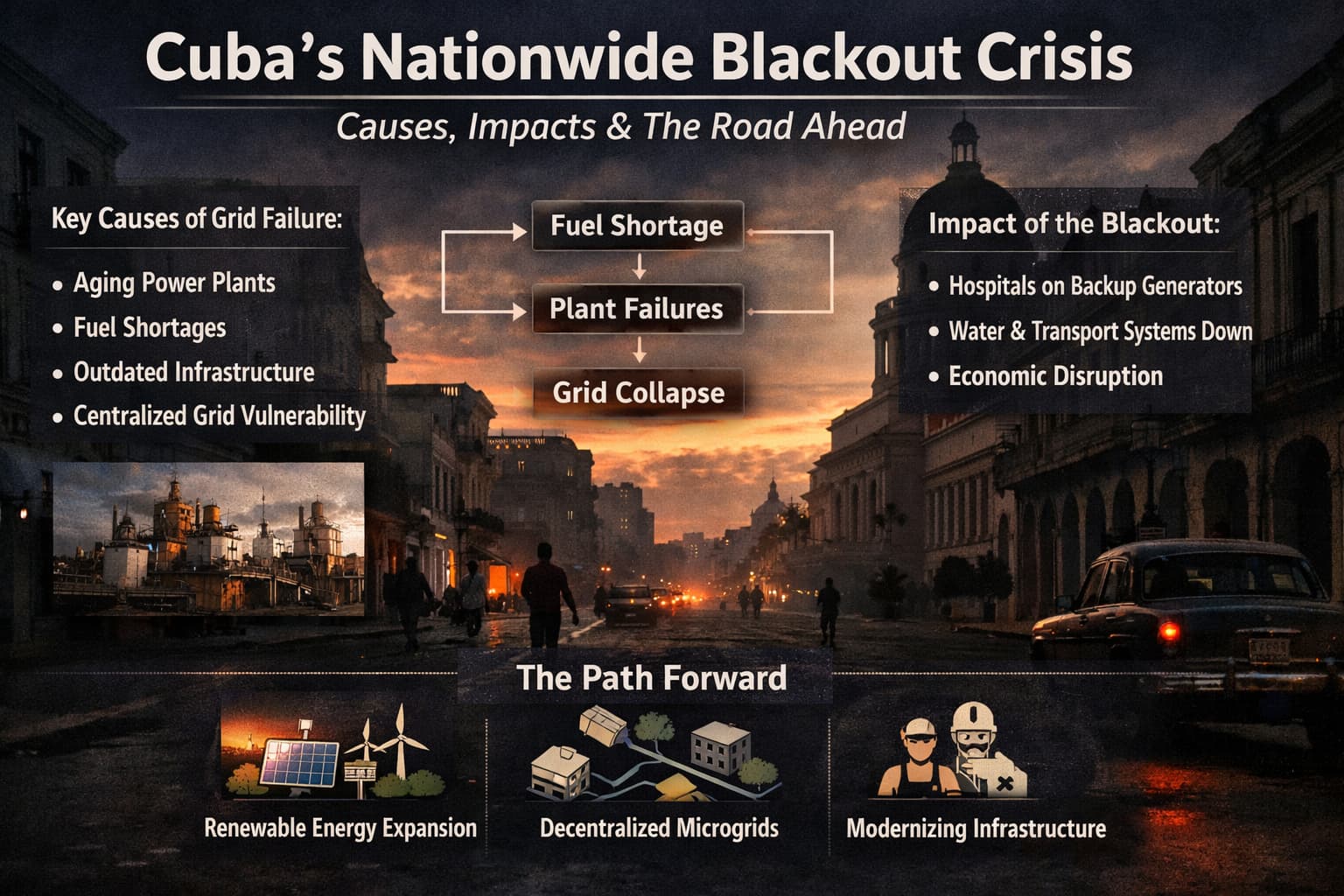
Overview of Cuba’s Nationwide Blackout Crisis
We are witnessing one of the most severe energy crises in modern Cuban history: the collapse of the national energy grid resulting in a nationwide blackout. This event has exposed systemic vulnerabilities in infrastructure, fuel dependency, and long-standing economic constraints. The outage disrupted daily life, halted industrial operations, and placed immense pressure on essential services such as hospitals, transportation, and communication networks.
The scale and suddenness of the blackout underscore a critical failure within the centralized energy system, raising urgent questions about resilience, modernization, and long-term sustainability.
Root Causes of the Cuba Power Grid Failure
Aging Infrastructure and Deferred Maintenance
Cuba’s energy grid relies heavily on thermoelectric power plants, many of which are decades old. These facilities suffer from:
-
Chronic underinvestment
-
Lack of spare parts due to import restrictions
-
Outdated technology with low efficiency
The accumulation of technical failures created a fragile system unable to withstand operational stress.
Fuel Supply Constraints
The Cuban energy sector depends significantly on imported fuel, particularly oil. Disruptions in supply chains and reduced imports have led to:
-
Insufficient fuel for power generation
-
Reduced operating capacity of power plants
-
Increased reliance on emergency shutdowns
These constraints directly contributed to the inability to maintain grid stability.
Centralized Grid Vulnerability
A highly centralized grid structure increases systemic risk. When a major plant or transmission node fails, cascading effects can shut down the entire network. This lack of decentralization means:
-
Minimal redundancy
-
No localized fallback systems
-
Rapid propagation of outages
Immediate Impact of the Nationwide Blackout
Economic Disruption
The blackout halted key sectors of the Cuban economy:
-
Manufacturing plants ceased operations
-
Retail and small businesses shut down
-
Tourism services were disrupted
Losses compound rapidly in an economy already under strain.
Public Services Under Pressure
Critical infrastructure faced severe challenges:
-
Hospitals relied on limited backup generators
-
Water supply systems failed in multiple regions
-
Public transportation came to a standstill
The blackout highlighted the fragility of essential services under energy stress.
Social and Daily Life Consequences
The population experienced widespread disruption:
-
Food spoilage due to refrigeration failure
-
Communication outages
-
Increased uncertainty and public concern
Energy insecurity directly affected quality of life across the country.
Structural Weaknesses in Cuba’s Energy System
Dependence on Fossil Fuels
The energy mix remains heavily dependent on oil-based generation. This creates:
-
Exposure to global price fluctuations
-
Vulnerability to geopolitical constraints
-
High operational costs
Limited Renewable Integration
Despite high solar potential, renewable adoption remains low. Key limitations include:
-
Insufficient investment in solar and wind infrastructure
-
Grid incompatibility with decentralized energy inputs
-
Lack of storage technology
Transmission and Distribution Losses
Energy losses during transmission are significant due to:
-
Aging transmission lines
-
Inefficient distribution networks
-
Technical faults and leakage
These losses further strain an already limited supply.
Government Response and Emergency Measures
Authorities implemented immediate measures to restore power and stabilize the system:
-
Gradual grid reactivation to prevent further collapse
-
Fuel reallocation to critical power plants
-
Emergency imports and international coordination
However, these responses are short-term fixes rather than structural solutions.
Path Forward: Rebuilding a Resilient Energy Grid
Modernization of Power Infrastructure
A comprehensive upgrade of existing facilities is essential:
-
Replacement of obsolete thermoelectric plants
-
Introduction of high-efficiency generation technologies
-
Implementation of predictive maintenance systems
Decentralization and Microgrids
Shifting toward decentralized energy systems can reduce risk:
-
Development of regional microgrids
-
Integration of local renewable sources
-
Enhanced grid flexibility and redundancy
Expansion of Renewable Energy
Investing in renewables offers long-term stability:
-
Large-scale solar farms
-
Wind energy projects in coastal regions
-
Energy storage solutions such as battery systems
Energy Efficiency and Demand Management
Reducing overall consumption can ease grid pressure:
-
Smart metering systems
-
Incentives for energy-efficient appliances
-
Industrial demand optimization
Strategic Implications for Cuba’s Energy Future
The nationwide blackout represents more than a temporary failure—it is a turning point. The crisis reveals the urgent need for structural transformation within the energy sector. Without decisive action, similar outages will remain a recurring threat.
By investing in modernization, diversification, and resilience, Cuba has the opportunity to transition from a fragile centralized system to a robust, sustainable energy framework capable of supporting economic recovery and long-term stability.
Conclusion
The collapse of Cuba’s national energy grid is the result of compounding structural weaknesses, fuel constraints, and outdated infrastructure. The widespread blackout has demonstrated the critical importance of energy resilience in maintaining economic and social stability. Moving forward, a strategic shift toward modernization, decentralization, and renewable integration will define the country’s ability to prevent future crises and ensure a reliable power supply for its population.