
EU Unveils Emergency Blueprint to Cut Gas and Oil Dependence
With fuel markets once again destabilized by geopolitical tensions in the Middle East, the European Commission has unveiled a new package of practical measures
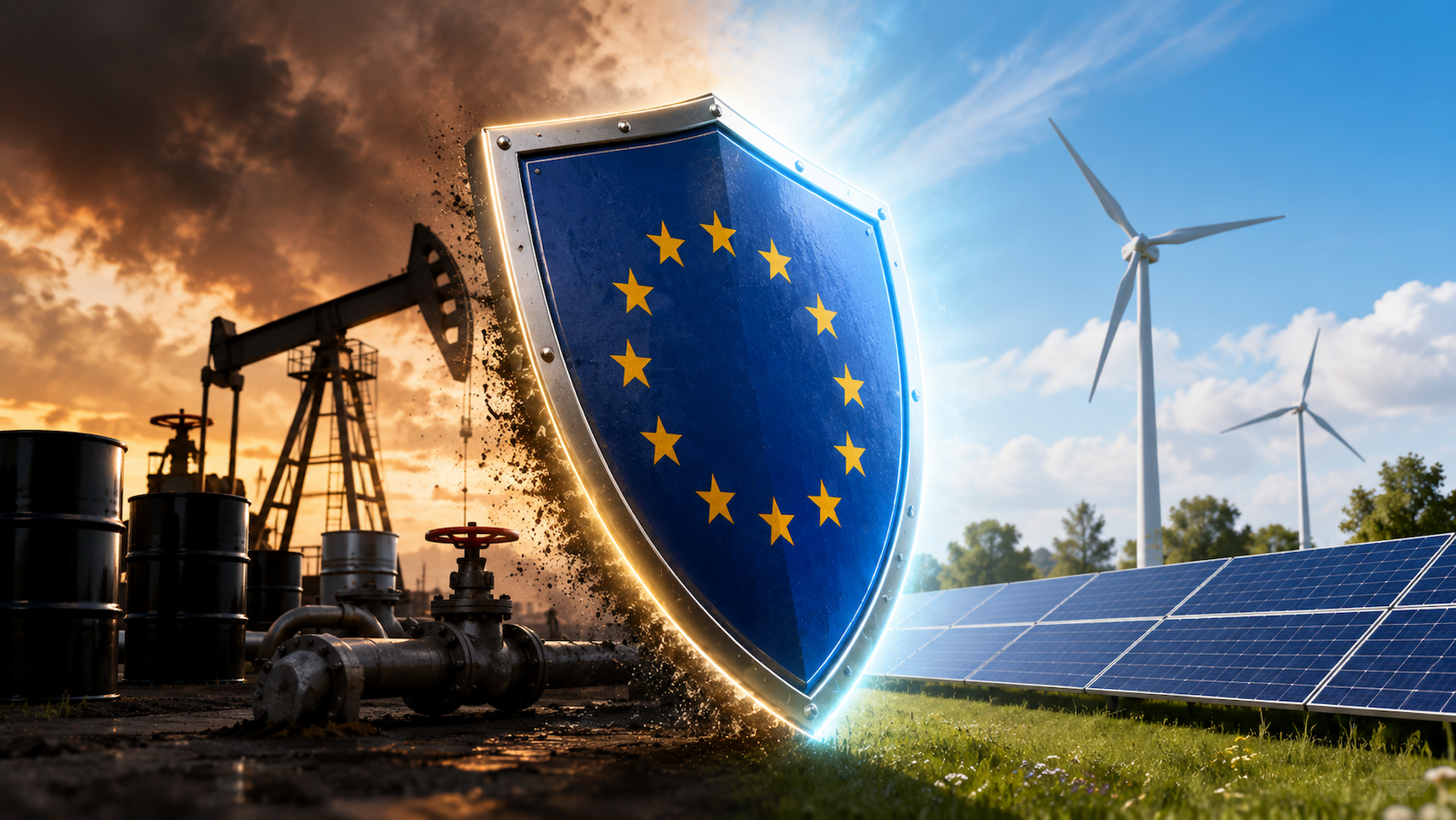
With fuel markets once again destabilized by geopolitical tensions in the Middle East, the European Commission has unveiled a new package of practical measures aimed at shielding European households and industries from another wave of energy volatility. Rather than introducing new legislation, Brussels is now turning attention toward strategies already tested inside member states, identifying policies that have successfully lowered fuel consumption, reduced costs, and accelerated the deployment of cleaner technologies.
The initiative was presented by EU Commissioner for Energy and Housing Dan Jørgensen during the Informal Energy Council gathering in Nicosia, where energy ministers discussed how Europe can strengthen its resilience while reducing exposure to imported fossil fuels. The newly published catalogue compiles national approaches that can be replicated across the European Union, focusing on immediate savings as well as long-term structural change.
At the center of the proposal are three broad objectives. The first is to protect consumers and industrial sectors while keeping Europe on course toward its climate and clean energy ambitions. The second is to accelerate short-term energy savings through the rapid expansion of efficient technologies and domestically produced clean energy systems. The third is to unlock greater investment in efficiency upgrades, renewable power generation, and demand-side flexibility.
According to the Commission, the recommendations are not theoretical. Each measure included in the catalogue has already been implemented successfully in at least one EU country and has produced measurable results. Officials argue that scaling these approaches across the bloc could significantly soften the economic impact of future fossil fuel disruptions.
The Commission also estimates that faster enforcement of existing European energy legislation could dramatically reduce overall fossil fuel demand. Current projections suggest annual natural gas consumption could decline by as much as 15 billion cubic metres, while oil use could fall by up to 20 million tonnes of oil equivalent every year. Such reductions would not only ease pressure on energy bills but also limit Europe’s vulnerability to unstable international energy markets.
Brussels describes the online catalogue as a continuously evolving resource rather than a fixed policy paper. Additional measures and examples from member states are expected to be added over time as governments continue adapting to shifting geopolitical and energy conditions.
Related links
Webpage: https://energy.ec.europa.eu/strategy/accelerateeu-strengthen-eu-energy-resilience\_en
Press release: https://ec.europa.eu/commission/presscorner/detail/en/ip\_26\_629