
Hungary keeps power restrictions on hold as voluntary cuts help stabilise electricity network
Hungary has managed to avoid compulsory electricity rationing for major industrial consumers after businesses and households voluntarily reduced power use, easing immediate strain on the national grid during an escalating energy emergency.
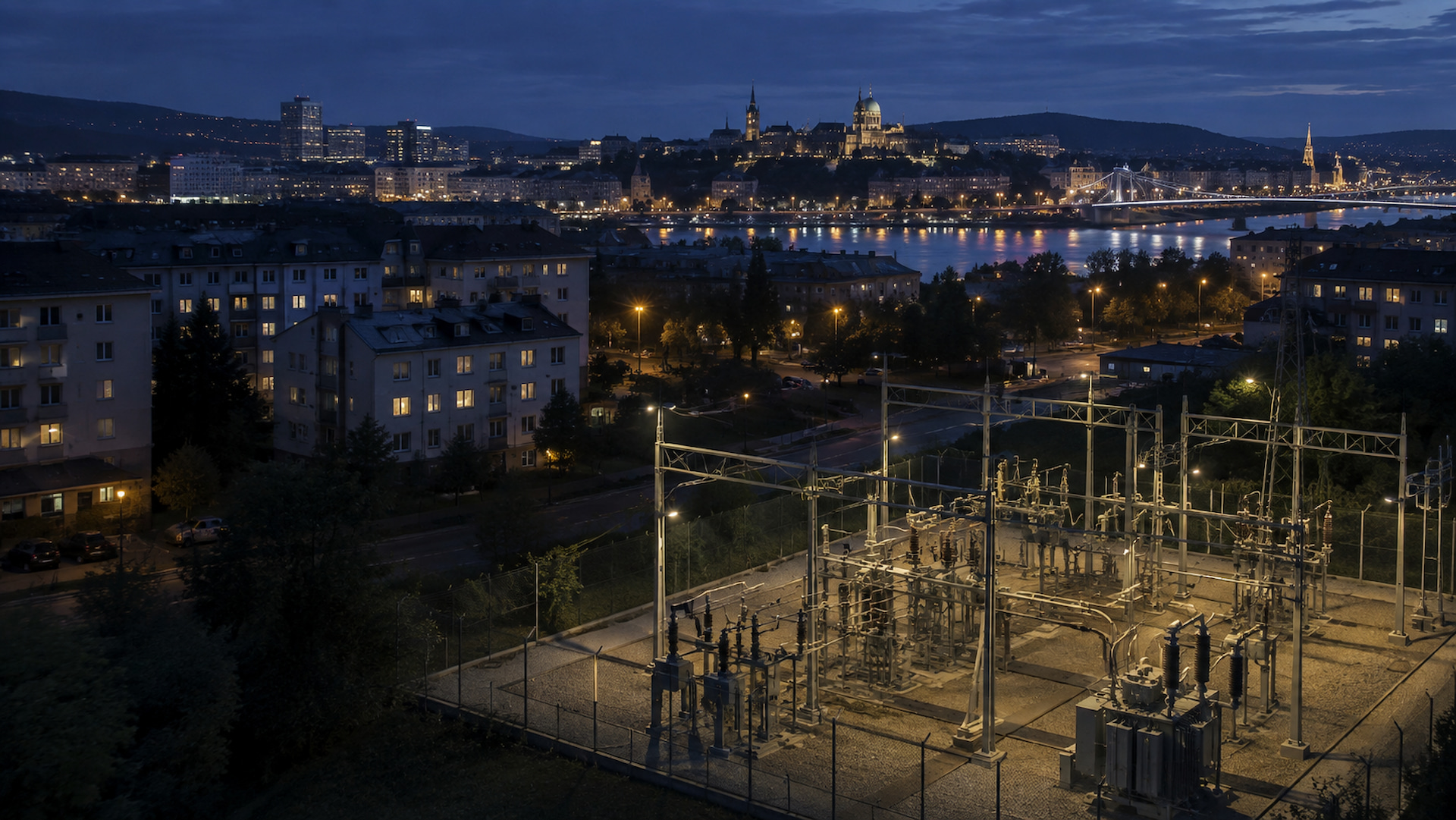
Hungary has managed to avoid compulsory electricity rationing for major industrial consumers after businesses and households voluntarily reduced power use, easing immediate strain on the national grid during an escalating energy emergency.
The country’s electricity system has come under severe pressure following the dramatic loss of generating capacity at the Paks Nuclear Power Plant. Reduced water levels in the Danube have limited cooling operations, leaving the facility operating at only a fraction of its normal output.
Emergency regulations that took effect on August 1 allow authorities to disconnect large industrial consumers if voluntary conservation efforts no longer prove sufficient. Under the revised framework, industrial users would face mandatory restrictions before residential consumers.
Government officials report that more than 300 companies have already committed to lowering electricity consumption by a combined 400 megawatts, while hundreds of additional firms are expected to join the initiative. Grid operator Mavir continues to monitor network conditions and has warned that compulsory measures remain available if the situation deteriorates.
The centre of the crisis is the four reactor Paks Nuclear Power Plant, which normally provides around half of Hungary’s electricity generation. Exceptionally low river levels have steadily reduced the amount of cooling water available, forcing operators to cut production in several stages.
By August 3, only one of the plant’s 500 megawatt reactors remained online, and even that unit was operating well below capacity after another turbine was taken offline during the weekend. Total generation had fallen to approximately 240 megawatts, compared with the station’s typical output of around 2,000 megawatts.
Plant operator MVM warned that the remaining reactor may also need to shut down if the Danube drops below the minimum level required for safe cooling water intake. Officials indicated that such a decision could become necessary within hours if conditions continue to worsen.
The company stressed that any shutdown would follow established nuclear safety procedures. While electricity production would cease, cooling systems and all critical safety equipment would remain fully operational, ensuring that reactor safety standards are maintained throughout the process.
A welcome improvement arrived elsewhere in the power sector when Dunamenti Erőmű, Hungary’s largest gas fired power station near Budapest, returned to full operation on August 2. The facility had previously lost 380 megawatts because of technical difficulties, and its recovery has helped offset part of the lost nuclear generation.
Speaking to RTL on August 2, Prime Minister Péter Magyar described the situation as an unprecedented energy crisis driven by a combination of prolonged drought, extreme summer temperatures and years of insufficient investment in critical energy infrastructure.
Addressing questions about whether the Paks disruption could have been prevented, Magyar argued that a permanent solution would require construction of a pumping station capable of guaranteeing adequate cooling water supplies regardless of river levels. He acknowledged, however, that nuclear licensing procedures would make completion of such a project impossible within a single year.
The prime minister also pointed to shorter term engineering options, including temporary barriers along sections of the Danube or modifications to the plant’s cooling canal that could help maintain sufficient water levels during future droughts.
According to Magyar, the loss of Paks could last for several weeks, creating a major challenge because the station normally covers roughly one third of Hungary’s average electricity demand. Any prolonged outage would require greater reliance on imports, reserve generating capacity and continued reductions in national electricity consumption.
Authorities nevertheless believe the grid can remain stable in the coming days. Higher electricity imports, available reserve plants and cross border support are expected to compensate for much of the missing generation, even as forecasts predict temperatures approaching 40 degrees Celsius and little rainfall across the Danube basin.
The crisis has also become a political issue. Magyar criticised previous administrations for failing to build the pumping station after the Danube reached similarly low levels in 2018. He argued that repeated warning signs had gone unaddressed despite years of discussion.
The prime minister accused state owned energy company MVM of directing billions of forints toward advertising campaigns and sponsorships instead of investing in infrastructure designed to protect one of the country’s most important power stations from predictable climate related risks.
Beyond responding to the immediate emergency, Magyar called for broader changes to Hungary’s energy strategy. He argued that faster expansion of wind power, electricity storage and transmission networks, supported in part through European Union funding, would strengthen long term energy security and reduce vulnerability during future extreme weather events.
At the end of July, the government asked energy intensive industries, including battery manufacturers, chemical producers and cement plants, to reduce electricity consumption between 5 p.m. and 10 p.m., the period when demand typically reaches its daily peak.
Several large companies quickly introduced conservation measures. Samsung SDI reported cutting water use by half while lowering electricity consumption by 10 percent. Energy company MOL also pledged a 10 percent reduction, and additional manufacturers suspended non essential operations during evening peak hours.
Public sector measures accompanied the industrial response. State railway operator MÁV announced temporary suspension of freight services during peak demand periods, while government ministries shifted employees to remote work wherever possible. Numerous private employers adopted similar arrangements to reduce office electricity consumption.
Initial results have exceeded expectations. Economy and Energy Minister István Kapitány said Sunday evening demand reached approximately 5,700 megawatts instead of the projected 6,400 megawatts. The reduction of around 700 megawatts exceeded the output of a single reactor at Paks. Magyar added that similar voluntary efforts had already lowered Saturday evening demand by roughly 500 megawatts.
Officials are also encouraging households to postpone activities with high electricity consumption, including electric vehicle charging and intensive air conditioning use, until after the evening demand peak.
The prolonged drought has created additional challenges beyond electricity generation. Water consumption has climbed by more than 25 percent in recent days as residents seek relief from extreme temperatures, placing increasing pressure on municipal water supply systems across the country.
Authorities say voluntary conservation, compliance with watering restrictions and public awareness campaigns have already reduced water demand in several regions. With meteorologists expecting the heatwave to continue for at least another two weeks, the government is urging residents to limit unnecessary water use wherever possible.
The worsening situation has prompted Agnès Forsthoffer, the parliamentary speaker currently exercising presidential powers, to request an emergency meeting with Prime Minister Magyar and parliamentary party leaders. The briefing will address both the intensifying heatwave and the country’s energy outlook as parliament remains suspended under emergency conditions.