
Renewable Power Strengthens Europe Against Energy Price Swings and Fossil Fuel Dependence
Europe can best protect itself from unstable energy markets by expanding electricity generated from domestic renewable sources, according to a new assessment released by the European Environment Agency (EEA). The analysis concludes that increasing renewable generation is not only an environmental objective, but also one of the most effective economic strategies for reducing exposure to volatile fossil fuel markets.
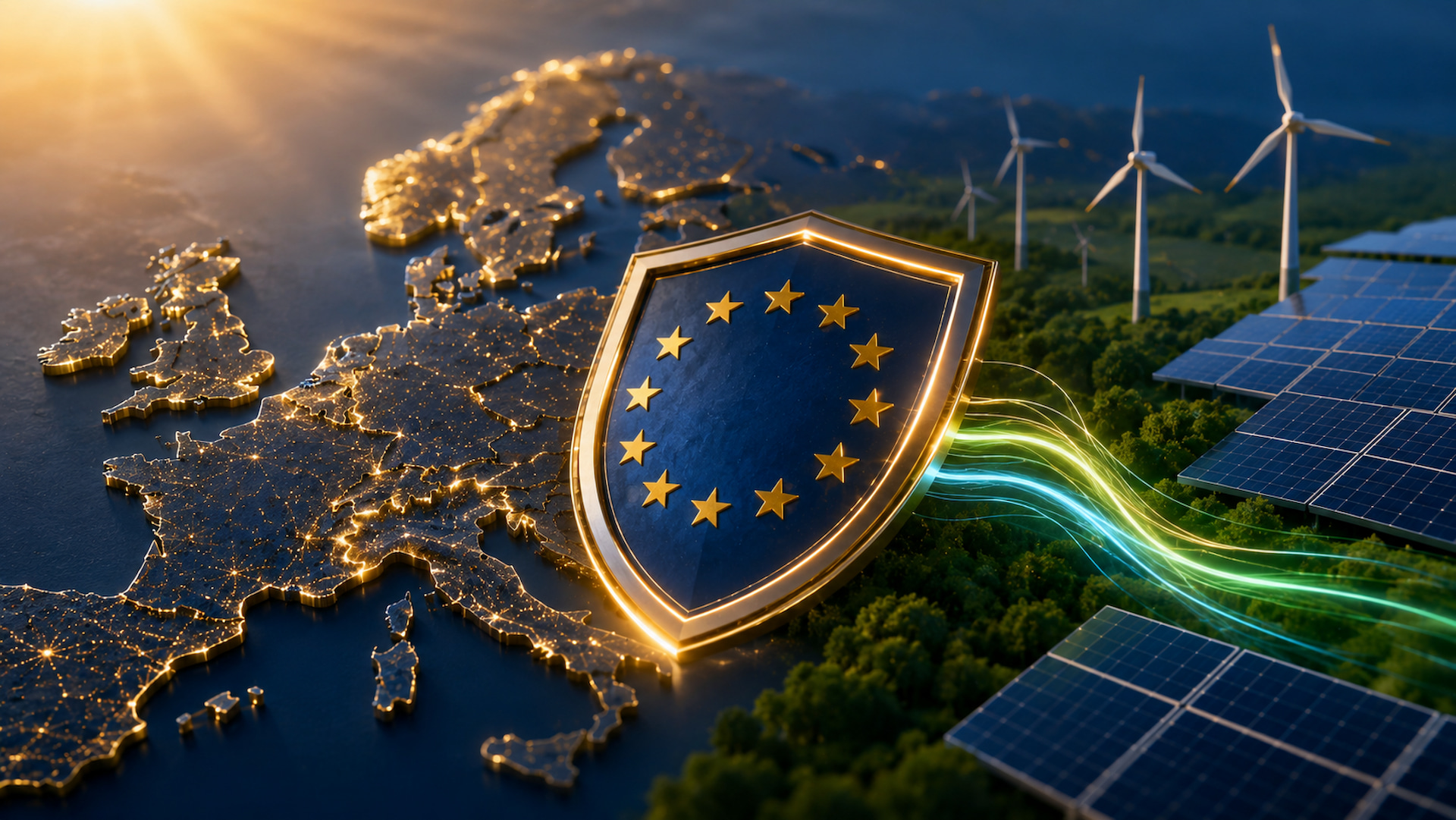
Europe can best protect itself from unstable energy markets by expanding electricity generated from domestic renewable sources, according to a new assessment released by the European Environment Agency (EEA). The analysis concludes that increasing renewable generation is not only an environmental objective, but also one of the most effective economic strategies for reducing exposure to volatile fossil fuel markets.
Recent developments illustrate the financial impact of this approach. By the middle of April, soaring global natural gas prices had added roughly €13 billion to the European Union’s energy bill. Over the same period, electricity produced from renewable sources generated savings estimated at €29 billion. These figures demonstrate that renewable energy is already helping to cushion Europe from sharp price fluctuations and could provide even greater protection as deployment accelerates, a finding highlighted in the EEA briefing Renewable Electricity: Best Buffer Against Gas Price Volatility.
Heavy reliance on imported fossil fuels remains a strategic weakness
Despite significant progress in clean energy, Europe continues to depend heavily on imported fossil fuels. In 2024, approximately 85% of the natural gas and 97% of the oil products consumed across the European Union originated outside its borders. This reliance leaves the bloc vulnerable to geopolitical disruptions, supply interruptions, and unpredictable market movements that directly affect energy costs, industrial competitiveness, and long term strategic resilience.
Over the past five years, events such as Russia’s invasion of Ukraine and disruptions to shipping through the Strait of Hormuz during tensions involving the United States, Israel, and Iran have underscored how international crises can rapidly translate into higher energy prices for European consumers and businesses.
Renewable expansion requires a modern energy system
According to the EEA’s scenario analysis, accelerating the rollout of wind and solar power could substantially reduce Europe’s reliance on imported fossil fuels while preventing wholesale electricity prices from increasing by as much as 125% by 2030. The projections are based on national development plans that anticipate renewable sources supplying approximately 68% of total EU electricity generation within the next decade.
The assessment also stresses that expanding renewable generation alone will not guarantee lower electricity prices. As larger shares of wind and solar enter the power system, complementary investments become increasingly important. Modern electricity grids, large scale energy storage, and demand response technologies are needed to manage variable renewable output efficiently.
Electrification across buildings, transport, and industry must progress alongside continued investment in renewable capacity, transmission infrastructure, storage solutions, energy efficiency, and flexible electricity consumption. Without balanced development across these areas, Europe risks increasing its dependence on gas-fired power generation during periods of high demand.
The EEA concludes that lasting reductions in electricity prices will depend on coordinated progress throughout the entire energy system. Expanding renewable generation, strengthening networks, improving storage capacity, encouraging flexible electricity use, and implementing pricing policies that support electrification together form the foundation of a more competitive, secure, and resilient European energy market.
These recommendations are explored in greater depth in the EEA report Renewables, Electrification and Flexibility: For a Competitive EU Energy System Transformation by 2030.