materials science
32 articles · page 2 of 4
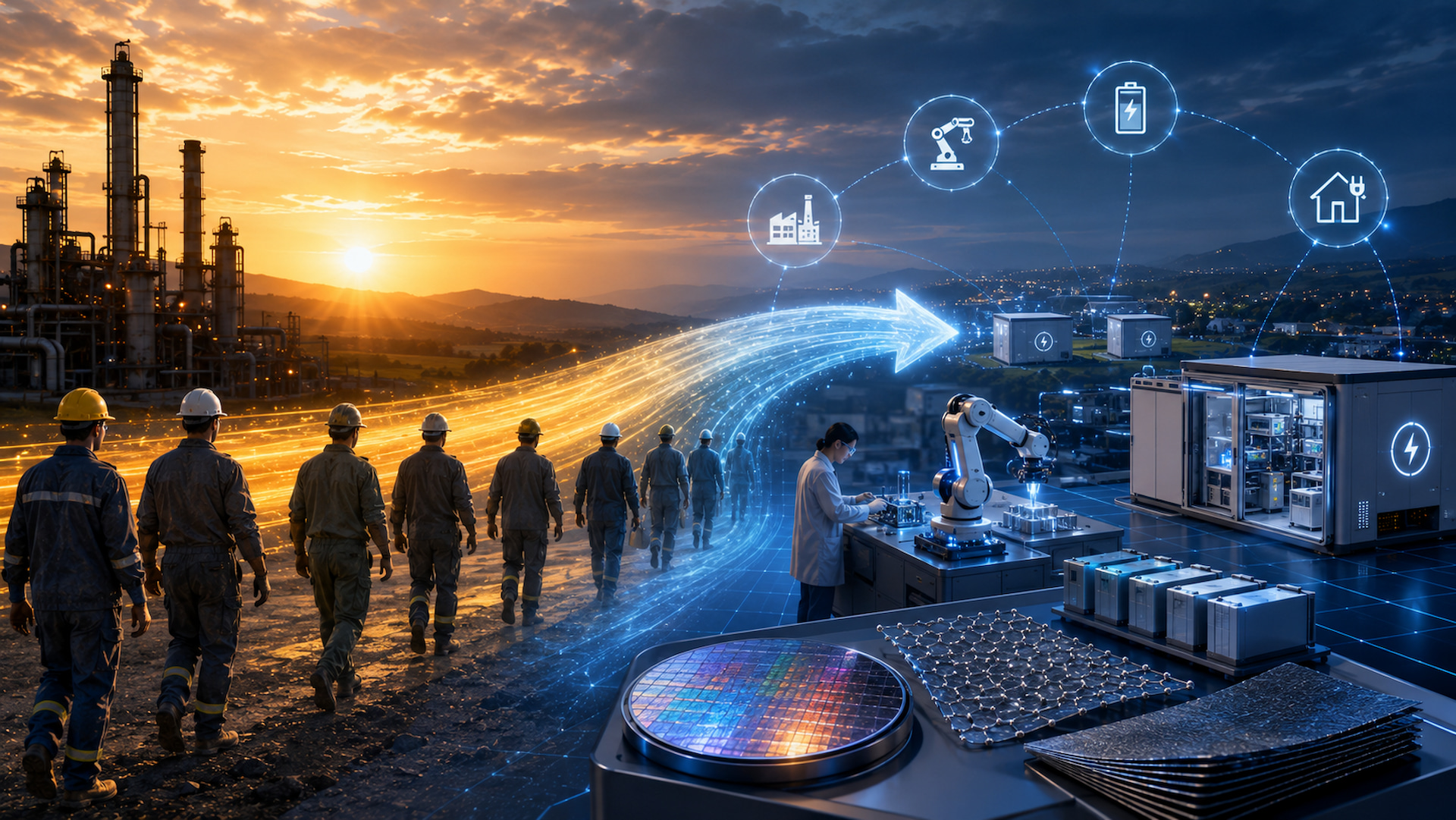
The Jobs That Haven’t Been Counted Yet
Every energy transition creates visible jobs. The more difficult question is identifying the ones that do not exist yet. New technologies rarely arrive…
What Happens When Energy Policy Cannot Name the Technology
Energy policy across most of the world is still written in a vocabulary inherited from the twentieth century: fuels, grids, tariffs, capacity factors, r…
The Energy Transition Needs a Different Question
Every serious conversation about the energy transition eventually arrives at the same table and asks the same question: how do we generate more? More so…
Why Geography Should No Longer Decide Who Gets Electricity
Coal had to be mined. Oil had to be drilled, piped, and refined. Hydropower required a river with sufficient gradient and a valley that could be flooded…
The Difference Between Electricity Access and Energy Freedom
Why a connected household and a free household are not the same thing, and why that distinction matters more than any grid map suggests
The Moral Physics of Continuous Power
The world measures electrification in connections. It should measure it in continuity. The two are not the same thing, and the distance between them is…
Africa Beyond Dependency: The Strategic Case for Neutrinovoltaic Power
There is a paradox at the centre of Africa's relationship with energy that no development report has fully resolved. The continent whose minerals built…
Energy has always been owned by someone else. Neutrinovoltaic is changing that.
The particle that passes through everything, equally, is becoming the basis for the first energy source that belongs to no one and therefore to everyone
The Emergency Measures Nobody Expected to Read About in 2026
When a single waterway closes, governments discover exactly how they built their energy systems, and exactly what that cost them
The Energy Source That Cannot Be Embargoed: Why Neutrinovoltaics Rewrites Geopolitical Risk
The history of modern conflict is, at its root, a history of energy. What changes when the energy source has no address?