
The Fourth Dimension of Energy Power: How Strategic Timing Is Redefining the Middle East
Maps have long dominated conversations about Middle Eastern energy. Political atlases, pipeline diagrams and reserve estimates have shaped decades of diplomatic analysis, encouraging the belief that influence begins underground and ends at export terminals. This framework has served policymakers well for generations, but it no longer captures the full picture. The energy landscape is changing faster than the assumptions that once explained it.
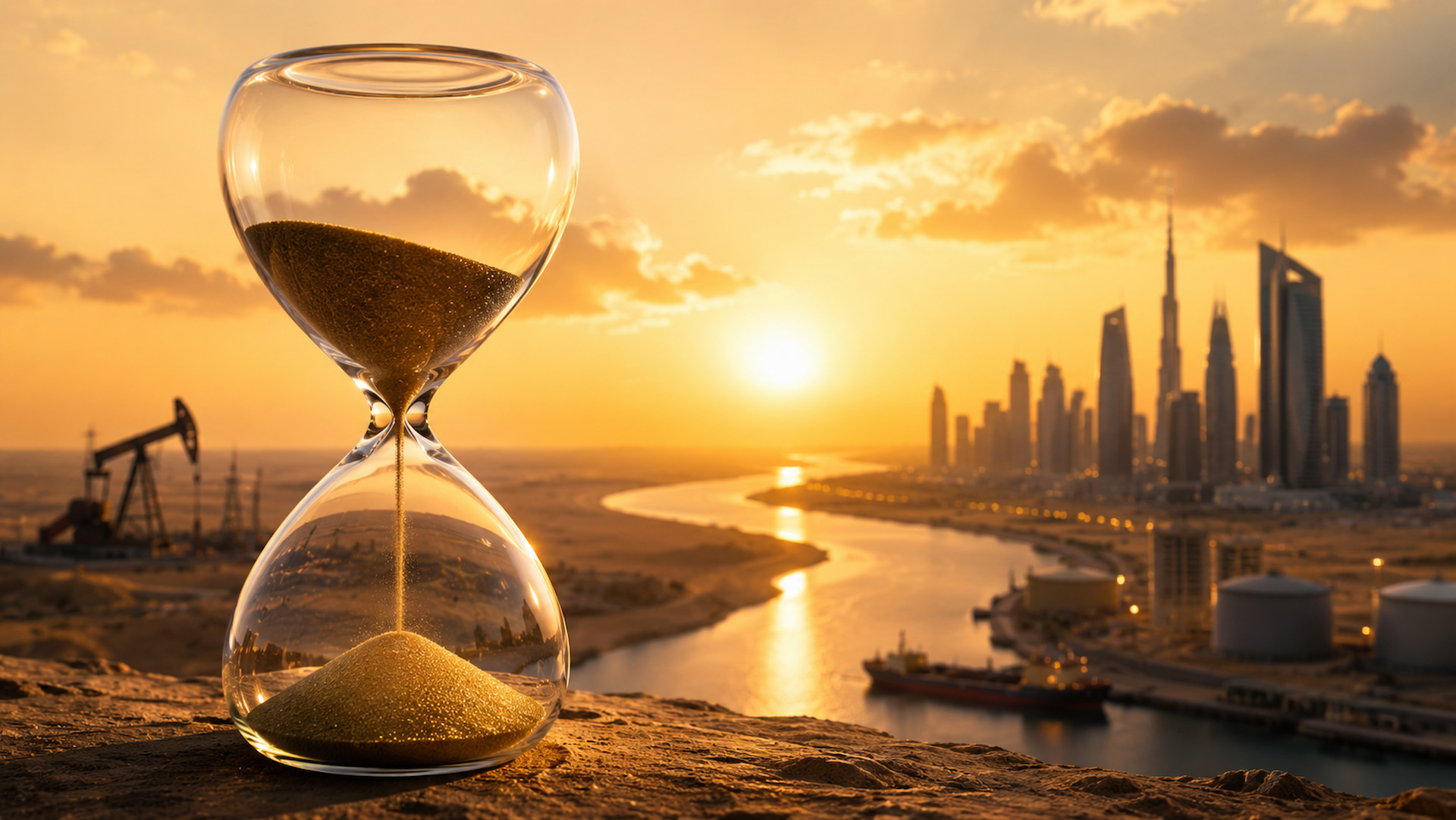
Maps have long dominated conversations about Middle Eastern energy. Political atlases, pipeline diagrams and reserve estimates have shaped decades of diplomatic analysis, encouraging the belief that influence begins underground and ends at export terminals. This framework has served policymakers well for generations, but it no longer captures the full picture. The energy landscape is changing faster than the assumptions that once explained it.
Oil fields remain where geology placed them. Natural gas reserves continue to represent immense national wealth. Infrastructure still determines whether energy reaches international markets efficiently. Yet these foundations no longer guarantee geopolitical relevance on their own. As renewable technologies mature, climate policies tighten and investment priorities shift, another variable has begun separating regional winners from those struggling to maintain influence.
That variable is not technological superiority or resource abundance.
It is timing.
The decisive advantage increasingly belongs to governments capable of acting before circumstances demand action rather than after events have already unfolded. In today’s energy environment, strategic decisions carry value not only because they are correct, but because they are made at precisely the right moment.
For the Middle East, this represents a profound transformation. The region is navigating two parallel timelines that rarely move at the same pace. One is driven by geopolitics, where wars, sanctions, diplomatic realignments and market instability reshape priorities almost overnight. The other is driven by the global transition toward lower carbon energy systems, where technological innovation and changing consumer demand steadily alter the long-term outlook for fossil fuels.
Managing one of these timelines is difficult.
Managing both simultaneously has become the defining challenge of modern energy diplomacy.
This shift requires moving beyond traditional measures such as production capacity, proven reserves and export volumes. Those indicators remain essential, but they do not explain why countries blessed with comparable natural resources often produce remarkably different diplomatic outcomes. Increasingly, success depends on understanding when to invest, when to expand, when to diversify and when to preserve existing partnerships.
Energy strategy is becoming inseparable from strategic timing.
The Hidden Currency Behind Energy Influence
Natural resources create opportunity, but they do not automatically create influence. History offers countless examples of countries that possessed enormous reserves yet failed to translate them into lasting geopolitical leverage. Others, with fewer advantages, achieved disproportionate international importance through careful planning and institutional discipline.
The distinction rarely lies beneath the surface.
Instead, it emerges through political judgement, administrative capability and an ability to anticipate future developments before they become obvious to everyone else.
Timing determines whether infrastructure is completed before demand accelerates. It determines whether diversification begins while financial resources remain abundant or only after revenues begin to decline. It determines whether governments shape events or spend years reacting to them.
The calendar has quietly become an instrument of state power.
Qatar and the Advantage of Arriving Early
Qatar’s position as one of the world’s leading exporters of liquefied natural gas is often attributed to the immense scale of the North Field. Geological fortune certainly provided an exceptional foundation, yet resource abundance alone cannot explain the country’s international standing.
Many states possess significant hydrocarbon reserves.
Far fewer recognised decades ago that future influence would depend on processing facilities, specialised shipping networks and long-term commercial relationships rather than simply on extraction.
Qatar committed enormous financial resources to LNG infrastructure long before global demand reached today’s levels. At the time, these investments appeared ambitious, even excessive. In hindsight, they proved remarkably well timed.
When European governments urgently searched for alternative gas suppliers following Russia’s invasion of Ukraine, Qatar did not need to reinvent its export strategy. Production facilities were already operating. Shipping capacity had already been secured. Commercial relationships already existed.
The country benefited not because circumstances changed in its favour, but because it had prepared for those circumstances years in advance.
Its continuing expansion of LNG capacity reflects the same philosophy. The objective extends beyond increasing output. It focuses on positioning itself for future market conditions before competitors fully appreciate their significance.
In this sense, foresight became a geopolitical asset.
Saudi Arabia and the Power of Controlled Flexibility
Saudi Arabia demonstrates a different relationship between time and influence.
Its position within global oil markets derives not only from production volume but from something considerably more sophisticated, the ability to adjust supply when circumstances require it.
The Kingdom deliberately maintains spare production capacity that can be activated or withheld according to changing market conditions. From a purely commercial perspective, unused capacity appears inefficient. From a geopolitical perspective, it represents extraordinary strategic flexibility.
This reserve allows Saudi Arabia to influence expectations before physical supply changes even occur. Announcements regarding future production frequently affect prices immediately, demonstrating that perceptions can become as influential as actual barrels entering the market.
The Kingdom therefore manages more than output.
It manages tempo.
Rather than competing solely through scale, Saudi Arabia competes through responsiveness. In increasingly volatile markets, flexibility itself has become a strategic resource.
The United Arab Emirates and the Timing of Reinvention
While some energy producers continue debating when diversification should begin, the United Arab Emirates chose to begin the process while hydrocarbons still generated substantial wealth and diplomatic influence.
This distinction matters.
Economic transformation undertaken after traditional revenue sources weaken becomes an exercise in adaptation. Transformation initiated while those revenues remain strong creates opportunities to shape entirely new sectors before competitive pressures intensify.
Through initiatives such as the Energy Strategy 2050, continued investment in renewable energy and the international expansion of Masdar, the UAE has attempted to position itself at the intersection of today’s energy economy and tomorrow’s.
Hosting COP28 reinforced that broader strategy.
The conference elevated the country’s international profile, but its greater significance lay in demonstrating that hydrocarbon producers need not wait for the energy transition to accelerate before redefining their own economic identities.
The UAE recognised that leadership in a changing energy system is established during the transition itself, not after it concludes.
The Dolphin Pipeline and the Value of Continuity
Not every strategic advantage emerges through expansion.
Sometimes influence is created by preserving what already exists.
The Dolphin Gas Project, connecting Qatar with the United Arab Emirates and Oman, continued supplying natural gas throughout the Gulf diplomatic crisis that erupted in 2017. Political relations deteriorated dramatically. Borders closed. Diplomatic communication largely collapsed.
Energy deliveries continued uninterrupted.
This persistence reflected more than diplomatic restraint. It illustrated how major infrastructure projects gradually create their own strategic logic.
Once industries depend on reliable gas supplies, electricity systems integrate long-term energy flows and commercial agreements span decades, interruption becomes increasingly expensive for every participant involved.
Infrastructure begins shaping politics rather than merely responding to it.
Governments may postpone negotiations.
Electricity demand cannot be postponed.
The Dolphin project demonstrated that consistency itself can become a source of geopolitical credibility. Reliable energy partnerships generate confidence that extends well beyond commercial transactions.
Israel and the Cost of Lost Momentum
The Eastern Mediterranean offers a contrasting lesson.
Israel’s offshore discoveries at Tamar and Leviathan generated understandable optimism. The country possessed sufficient reserves to satisfy domestic demand while opening possibilities for regional exports.
Potential, however, is not influence.
Major export infrastructure requires years of planning, financing and construction. Regulatory processes unfold gradually. Regional politics introduce additional complexity.
When Europe sought alternatives to Russian natural gas after 2022, the Eastern Mediterranean appeared positioned to play a larger role. Yet infrastructure limitations and unresolved regional challenges prevented the region from fully capitalising on that moment.
Opportunities in energy diplomacy rarely remain available indefinitely.
Unlike Qatar, which had invested long before demand accelerated, Israel and its regional partners encountered extraordinary market conditions without fully developed export capabilities.
Resources created possibility.
Timing determined outcome.
A New Framework for Understanding Energy Diplomacy
These examples differ in geography, politics and economic structure, yet they reveal a common pattern.
Qatar succeeded through early investment.
Saudi Arabia through flexible market management.
The United Arab Emirates through timely diversification.
The Dolphin project through uninterrupted continuity.
Israel illustrates the consequences of delayed execution.
Viewed separately, these appear to represent independent case studies.
Viewed together, they describe a broader transformation.
For decades, analysts explained Middle Eastern energy through three interconnected factors.
Geography determined where resources existed.
Ownership determined who controlled them.
Infrastructure determined how they reached consumers.
These dimensions remain essential, but they no longer explain the full distribution of geopolitical influence.
A fourth dimension has emerged.
Strategic time.
Geography explains location.
Resources explain possession.
Infrastructure explains movement.
Timing explains advantage.
Defining Temporal Statecraft
This evolving reality may be understood through the concept of Temporal Statecraft, a framework describing how governments convert carefully timed decisions into geopolitical influence.
Rather than replacing conventional energy analysis, the concept expands it by recognising that identical physical assets can produce vastly different outcomes depending on when strategic choices are made.
Five interconnected forms of temporal advantage define this approach.
Investment timing rewards countries that build capacity before markets mature.
Market timing enables governments to shape expectations through production flexibility.
Diversification timing encourages economic transformation while existing industries continue generating wealth.
Continuity timing strengthens credibility by maintaining reliable energy relationships despite political disruption.
Opportunity timing recognises that favourable geopolitical conditions rarely remain open forever.
Together, these principles suggest that modern energy diplomacy increasingly rewards anticipation over reaction.
The New Competition
Control over hydrocarbons transformed international politics throughout the twentieth century. That reality has not disappeared, but its strategic context has become more complex.
Fossil fuels continue to matter.
What is changing is the length of time during which they can be converted into lasting diplomatic influence.
Governments therefore face a different strategic calculation than previous generations. Success depends not only on discovering resources or expanding production, but on recognising when investments should begin, when infrastructure should be completed and when economic transformation should accelerate.
The future of Middle Eastern energy diplomacy will be determined as much by calendars as by geology.
The region’s natural wealth remains extraordinary.
Whether that wealth continues translating into global influence will depend increasingly on decisions made before opportunities become obvious.
The next geopolitical advantage may not belong to the country with the largest reserves.
It may belong to the country that understands time better than anyone else.