
The Last Oil Shock: Why the Iran War Could Either Break or Accelerate the Clean Energy Transition
The flames were still visible from satellite imagery when the economists began revising their forecasts upward. Within days of the first US-Israeli strikes on Iranian territory, crude markets convulsed in ways not seen since the early 1970s. The International Energy Agency reached for language it had never used before, describing what was unfolding as the worst oil crisis in recorded history.
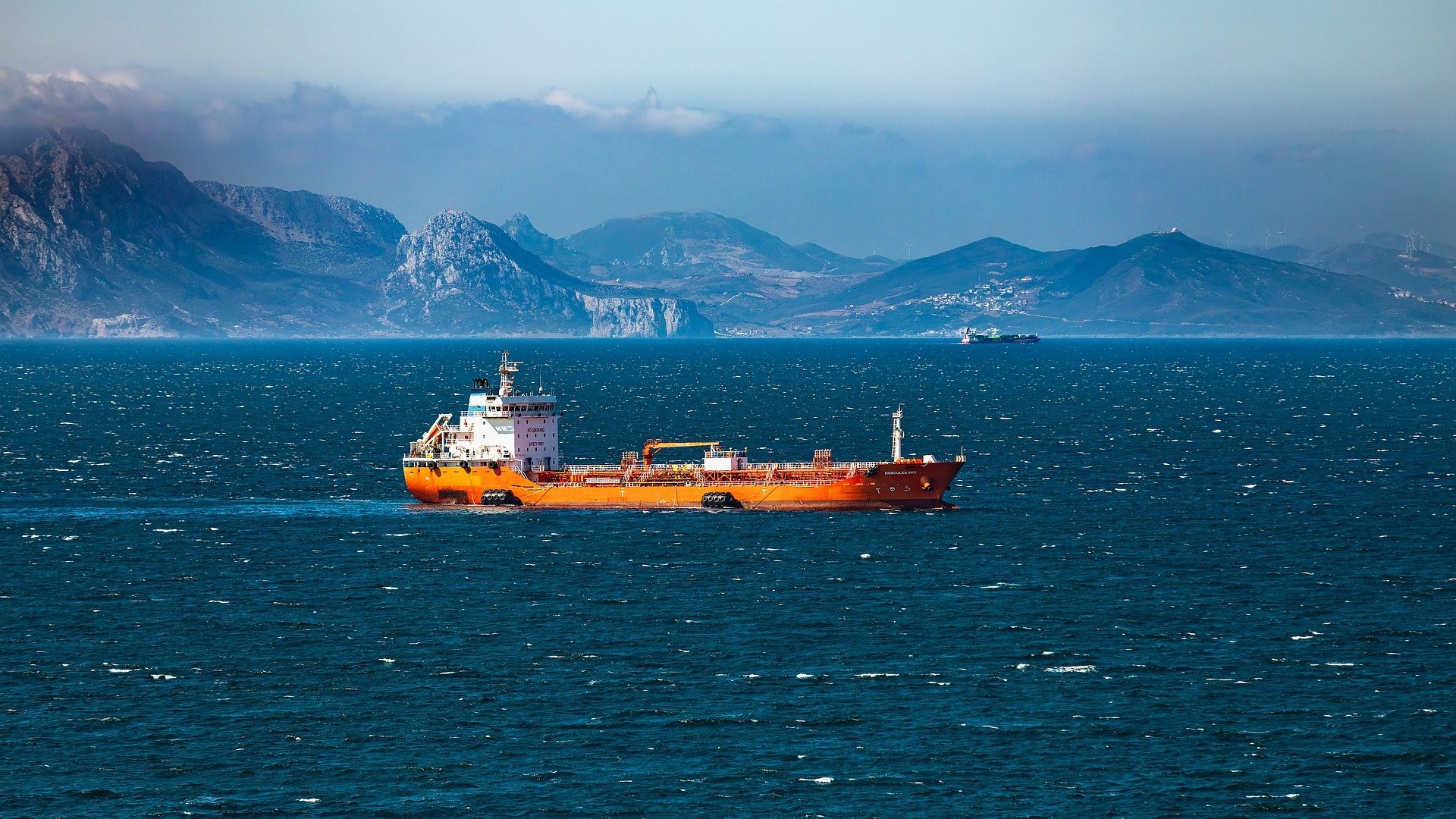
The flames were still visible from satellite imagery when the economists began revising their forecasts upward. Within days of the first US-Israeli strikes on Iranian territory, crude markets convulsed in ways not seen since the early 1970s. The International Energy Agency reached for language it had never used before, describing what was unfolding as the worst oil crisis in recorded history. Twenty percent of the world’s oil supply moves through the Strait of Hormuz. When that corridor becomes a combat zone, the arithmetic of the global energy system changes very fast, and not gently.
What followed was a familiar political scramble: emergency reserves, expedited drilling permits, a White House announcement that a French company would receive a billion dollars to abandon offshore wind plans and pivot back to fossil fuel development. The machinery of crisis, as it has done before, began running in the direction of the familiar.
But something is different this time. Something that was not true during any previous oil shock in modern history.
The alternative already exists. And in many places, it is already cheaper.
The Insulated and the Exposed
The crisis has drawn a sharp line between economies that invested in clean energy and those that did not. Spain and Portugal watched their electricity prices fall in recent weeks, an almost surreal counterpoint to the panic gripping fuel markets elsewhere. Pakistan, which has seen an extraordinary surge in rooftop solar deployment over the past five years, found that households and businesses had quietly built themselves a buffer. Batteries and panels, it turned out, were already cheaper than grid electricity imported from abroad. The crisis simply made that calculation more visible.
Electric vehicles have performed a similar function at the transport level. In China, more than half of all new cars sold are now electric. In Nepal, that figure reaches 70%. For those drivers, the price of a barrel of oil is an abstraction, not a monthly anxiety.
Jan Rosenow, a professor of energy at Oxford University, put the underlying logic plainly: once a wind or solar installation is built, the fuel costs nothing. The geopolitics of a strait, a pipeline, or a terminal simply do not apply.
The Complication Nobody Wanted to Name
And yet the war is simultaneously making the transition harder to achieve.
The Strait of Hormuz is not only a corridor for oil tankers. It is a channel through which metals move, including aluminum, a material essential to the construction of solar panels. The Middle East accounts for roughly 9% of global aluminum production. Producers there have begun to curtail operations. The chokepoints that are driving up oil prices are also quietly driving up the cost of building the infrastructure that would eventually replace oil.
Inflation compounds the problem. Renewable energy projects are not cheap to operate, but they are expensive to build. They require large sums of capital upfront before a single watt of power flows. When inflation rises and interest rates follow, the economics of that upfront investment deteriorate. Projects that were viable last year sit in financing limbo this year.
Coal, meanwhile, is moving quickly to fill the gaps. Asian economies that depend on imported liquefied natural gas, much of which passes through Hormuz, are burning more of it to keep the lights on. Iran’s strike on Qatar’s LNG terminal, the largest in the world, has accelerated that logic considerably. China had reduced its coal generation for the first time in 2025. That progress, according to Columbia University energy fellow Ira Joseph, is now likely to reverse.
The Lock-In Trap
The deeper danger is not what happens in the next few months. It is what gets built and then stays built for thirty years.
High fossil fuel prices generate profits that flow back into exploration, extraction, and infrastructure. Venture Global announced a new five-year LNG supply contract this week. TC Energy said the war was making a major LNG export facility expansion more likely. These are not temporary arrangements. They are commitments that embed fossil fuel infrastructure into the global energy system for decades.
Rosenow calls this the carbon lock-in effect. Every new terminal, every new pipeline, every new drilling concession approved in a moment of crisis becomes an argument for keeping that investment operational long after the crisis has passed. The urgency of war becomes the architecture of the future.
Lauren Pagel of the environmental group Earthworks was blunt about it: the conflict is being used as a pretext for extraction that would have faced scrutiny in calmer times. “The decision to double down on fossil fuels doubles down on disaster,” she said, citing impacts on communities living near extraction sites, on the climate, and on the geopolitical instability that dependence on fossil fuels perpetuates in the first place.
The Policy Window
Economists and energy analysts are not short of proposals for what governments should do instead.
Rosenow points to tax reform as a structural lever. Electricity carries a disproportionate share of energy taxation in most countries, artificially inflating its cost relative to gas. Correcting that imbalance would make electrification more competitive without requiring new subsidies.
Gregor Semieniuk, a professor of public policy and economics at the University of Massachusetts Amherst, advocates windfall taxes on oil and gas companies. The logic is pointed: profits generated by a war rather than by business skill or investment should not send the same signal to financial markets as profits earned through genuine productivity. Taxing them away reduces the incentive to expand production and redirects capital toward alternatives.
Semieniuk also raises the possibility of targeted subsidies for aluminum and other materials critical to renewable buildout, and careful attention to interest rate trajectories, potentially through strategic short-term price controls. His most direct prescription, however, is also the most obvious: end the conflict.
Pagel adds fossil fuel subsidy elimination and pollution pricing to the list, alongside a demand that rights frameworks, including Indigenous and environmental protections, be embedded into every stage of energy transition planning.
A Superior Alternative
What distinguishes this crisis from every previous oil shock is a point that Kingsmill Bond, a strategist at the energy think tank Ember, made with unusual directness.
Solar, wind, and electric vehicles were already winning before the first missile was fired. They are cheaper, faster to deploy, locally produced, and available at enormous scale. Previous oil crises hit a world where the alternatives were theoretical or prohibitively expensive. This one has arrived at a moment when the alternatives are commercial, competitive, and installed in millions of homes, factories, and vehicles across the planet.
The question is not whether clean energy can eventually displace fossil fuels. That question has been answered. The question is whether the institutions managing this crisis will use it to accelerate a transition already underway, or whether they will once again let emergency become the enemy of change.
Forty years ago, a biology teacher in Westphalia put up a small turbine and called it the future.
He was right. The argument now is only about how much longer we are willing to wait.