
The Renaissance That Exists Only on Paper
Forty years ago, a reactor exploded in northern Ukraine. I was a child in Mogilev, about 350 kilometres away, in a region that wore the fallout for years. I am not relitigating that. But I grew up watching official confidence collide with physical reality, and that particular collision has a way of repeating itself.
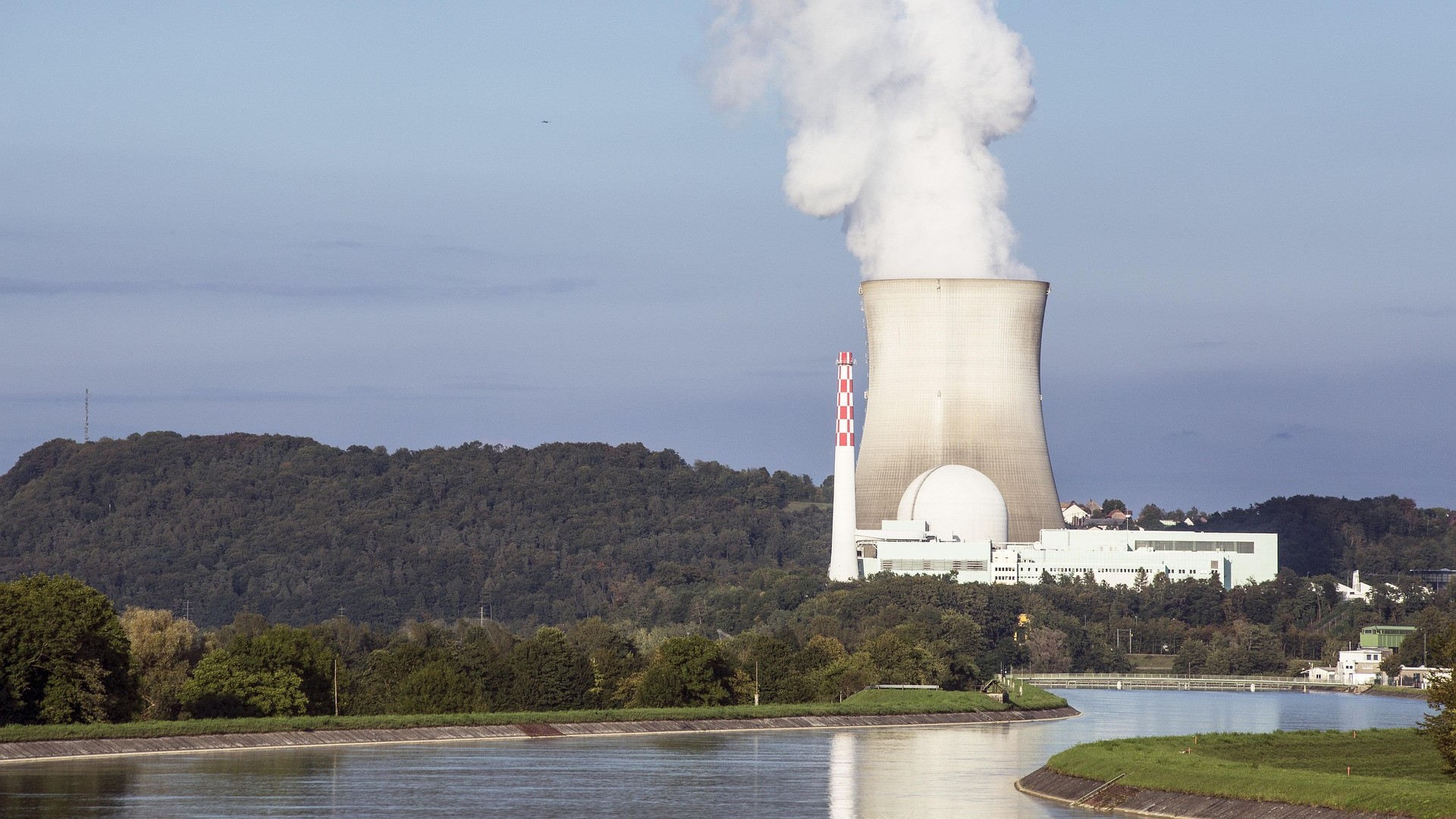
Forty years ago, a reactor exploded in northern Ukraine. I was a child in Mogilev, about 350 kilometres away, in a region that wore the fallout for years. I am not relitigating that. But I grew up watching official confidence collide with physical reality, and that particular collision has a way of repeating itself.
The nuclear revival of 2026 has real political momentum. Thirty-three countries signed onto the COP28 declaration. The EU Taxonomy made room for it. Microsoft put money behind the Three Mile Island restart. Goldman Sachs reached for the phrase “new nuclear age.” The enthusiasm is not irrational. Climate targets are failing, energy security is a genuine crisis, and nuclear’s lifecycle emissions sit at around 12 grams of CO₂ per kilowatt-hour, among the lowest of any electricity source on the grid.
What the enthusiasm cannot answer is a simple factual question: who is actually building it?
Between 2020 and 2024, 97% of all new reactor construction starts globally came from China and Russia. Westinghouse, EDF, and the other Western vendors whose governments signed the COP28 declaration recorded zero new starts. The countries proclaiming the renaissance are not the countries constructing it. That gap is not a lag in the pipeline. It reflects two decades of dismantled industrial capacity, a string of first-of-a-kind cost failures that ran billions over budget, and a post-Fukushima regulatory environment that no political declaration has yet untangled.
The climate case deserves the same scrutiny. Nuclear’s emissions profile is genuinely excellent. But a reactor that takes fifteen to twenty years to build in the West delivers carbon-free electricity in the 2040s. The decade that matters most for avoiding the worst warming trajectories is now, not then. Battery storage costs are falling fast enough that in several modelled scenarios, new nuclear’s economic case weakens further before the plant even opens. The only nuclear climate action available on a timeline matching the emergency is life extension of existing plants: Belgium’s Doel reactors, France’s ageing fleet. These receive a fraction of the political attention directed at new builds that have not broken ground.
The energy security argument is stranger still. European governments position nuclear as a route out of Russian energy dependence. Yet EU imports of Russian nuclear fuel rose in both 2023 and 2024, after the invasion of Ukraine. Five EU member states operate Russian-designed VVER reactors with no fully qualified Western fuel alternative currently available at scale. Hungary is constructing two new Russian reactors on a 12.5 billion euro Russian state loan. The independence narrative is coherent for some fuel chains and reactor types. For others, it trades one dependency for another, and locks it in for sixty years per unit.
Then there is the precedent that the nuclear debate has largely refused to absorb. Since 2022, Europe’s largest nuclear facility at Zaporizhzhia has been under military occupation, with an operational plant used as an instrument of coercion. No adequate international legal framework existed for that scenario. None has been created since. Every new reactor built in a geopolitically contested region inherits that vulnerability, and the governance architecture of the supposed renaissance has not begun to address it.
None of this constitutes a case that nuclear is uniquely dangerous or beyond redemption. The evidence does not point there. What it does point to is a debate conducted with almost theatrical selectivity on both sides. Advocates conflate the economics of long-depreciated existing plants with the costs of new construction, which are not remotely comparable. Critics deploy levelised cost comparisons stripped of system-level considerations and advance proliferation arguments that, as a practical matter, tend to favour Russian and Chinese exports over Western alternatives. Neither side is engaging the question that actually matters.
That question is not whether nuclear is good or bad in the abstract. It is whether the conditions required for nuclear to deliver its climate contribution reliably and on a useful timeline are currently met. Western construction costs remain uncontrolled. Fuel supply chains are not diversified. The build rate sits roughly three times below what credible climate scenarios require. And the security risks introduced by Zaporizhzhia have no institutional answer.
The renaissance becomes real when concrete is poured on schedule, when fuel comes from genuinely diversified sources, when construction rates match the climate calendar, and when the governance architecture addresses the category of risk that a reactor under military occupation represents. None of those conditions are currently met.
Forty years after Chernobyl, the contaminated territories in Belarus and Ukraine remain. The decisions that produced them were made by people who were entirely confident they understood what they were doing. Confident declarations and distant consequences are an old pairing in this industry. The 2026 version deserves more scrutiny than it is getting.