
When the Rivers Retreat: Europe’s Drought Becomes an Electricity Crisis
A river does not need to disappear to stop doing its job. Across Central and Southeastern Europe, the Danube is demonstrating that reality with unusual force. Months of scarce rainfall and successive periods of extreme heat have lowered water levels, strained transport networks and damaged farmland. Now the consequences are reaching much deeper into the region’s electricity system.
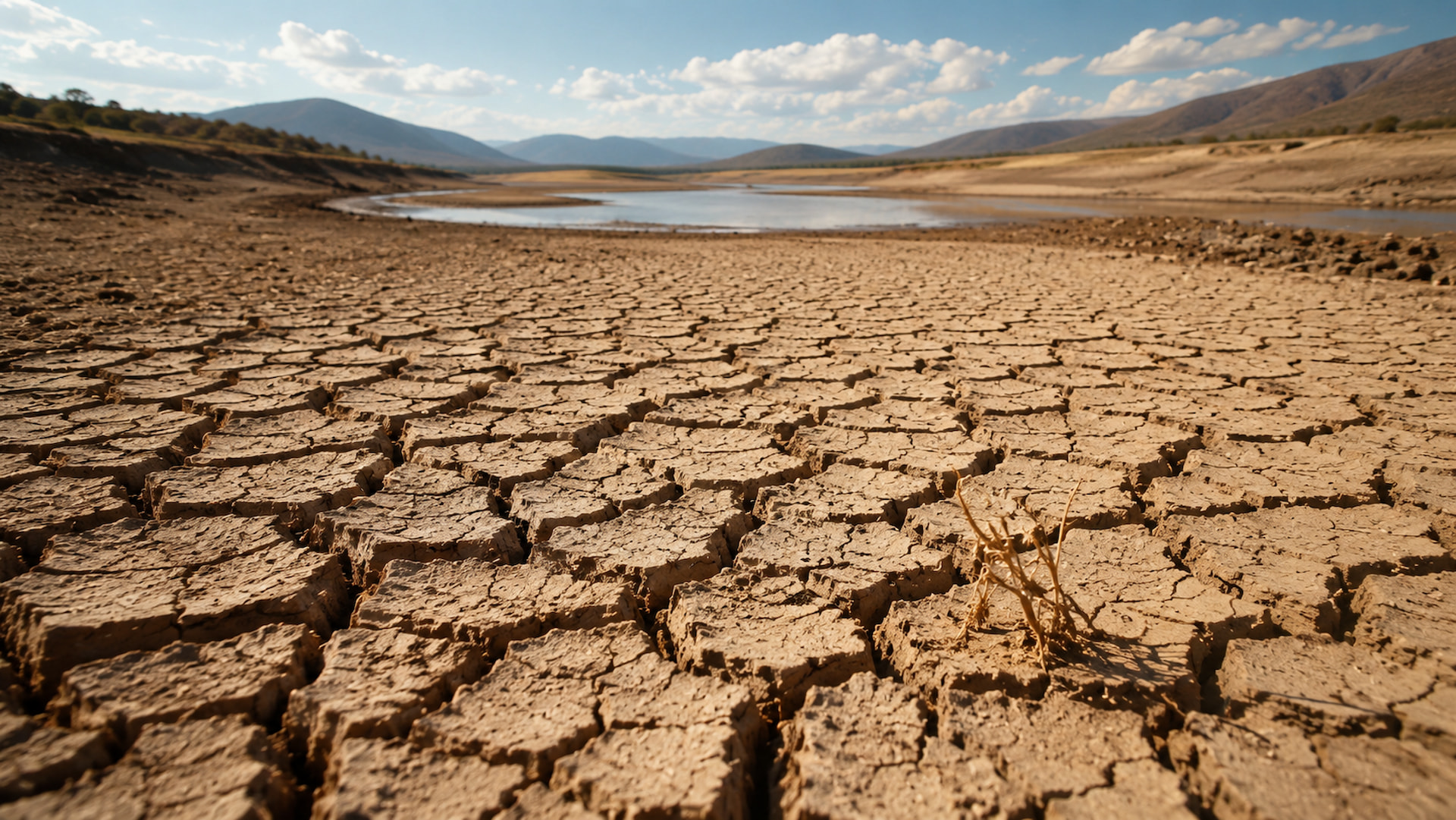
A river does not need to disappear to stop doing its job. Across Central and Southeastern Europe, the Danube is demonstrating that reality with unusual force. Months of scarce rainfall and successive periods of extreme heat have lowered water levels, strained transport networks and damaged farmland. Now the consequences are reaching much deeper into the region’s electricity system.
Hungary and Romania have emerged as the most exposed countries, with nuclear generation curtailed and major industrial consumers reducing production. Serbia is confronting pressure on both hydropower and coal generation. Austria and Slovakia have experienced disruption without the same degree of crisis. Bulgaria, meanwhile, has largely avoided the electricity shortages affecting its neighbors.
The weather is broadly shared. The consequences are not.
What separates these countries is the architecture of their energy systems, particularly their dependence on river water, the design of their power plants, the diversity of their generation portfolios and their ability to store electricity when production exceeds immediate demand.
From Agricultural Drought to Energy Emergency
The first signs of trouble appeared where drought usually becomes visible earliest. Fields dried out, soils lost moisture and expectations for maize and sunflower harvests deteriorated across Southeastern Europe. Transport networks then began to feel the heat. High temperatures affected roads and rail infrastructure, while falling river levels increasingly restricted navigation on the Danube.
The electricity sector has now become one of the most consequential fronts of the crisis.
Rivers perform several functions within modern energy systems. They drive hydroelectric turbines, provide cooling water for thermal and nuclear power stations and serve as transport corridors for fuels and industrial commodities. A sufficiently severe drought can therefore weaken several components of an electricity system simultaneously.
That combination is particularly dangerous along the Danube.
Hungary: A Nuclear Dependency Meets a Water Shortage
Hungary is experiencing the region’s most serious electricity disruption. Rainfall has been scarce across large areas for months, while extreme temperatures have intensified evaporation and pushed electricity demand higher. Budapest reached 43 degrees Celsius, with temperatures exceeding 40 degrees elsewhere in the country.
The central problem lies south of the capital at the Paks nuclear power plant.
Paks normally occupies an exceptionally important position in Hungary’s electricity system, generating approximately half of the electricity produced domestically and roughly one-third of total consumption. But nuclear reactors require reliable cooling, and Paks depends heavily on the Danube.
With the river at exceptionally low levels and its remaining water unusually warm, the plant has been forced to reduce operations dramatically. Output has fallen to around 12 percent of capacity. A further decline in river levels could force a complete shutdown.
The consequences have spread rapidly into industry. The government has asked major electricity consumers to reduce demand, prompting companies including Audi’s Győr operation and energy group MOL to scale back production.
Hungary’s vulnerability is not simply the result of extreme weather. It also reflects the structure of its electricity system.
The country has developed substantial solar generation, but comparatively limited storage capacity restricts its ability to shift surplus solar electricity into periods of higher demand. Wind and hydropower play relatively small roles, while the fleet of modern gas-fired plants is insufficient to replace a prolonged loss of nuclear output without additional pressure on imports.
Restarting nuclear generation also takes time. Even if Danube conditions improve rapidly, Paks cannot immediately return to full output. Hungary is therefore likely to remain dependent on costly electricity imports while the plant recovers.
The government led by Peter Magyar has responded by announcing a broad reassessment of the country’s energy development strategy.
Romania: Engineering the River to Protect Generation
Downstream, Romania is confronting a similar problem.
The Cernavoda nuclear power station in southeastern Romania supplies approximately one-fifth of the country’s electricity. Falling Danube levels have already forced one of its two 700-megawatt reactors offline.
Authorities have resorted to unusually direct intervention.
A rock formation was blasted to redirect more water toward the eastern branch of the Danube serving the nuclear facility. Dozens of tons of additional rock were placed in the river in an attempt to channel a greater share of the remaining flow toward the plant.
Romania has a more diversified electricity system than Hungary, combining nuclear generation with natural gas, coal, wind and hydropower. Yet diversification alone does not eliminate climatic vulnerability when several generation sources depend on the same environmental resource.
Hydropower provides roughly one-fifth of Romanian electricity, with the Iron Gate complex on the Danube playing a major role. Low river levels therefore affect both nuclear cooling and hydroelectric production.
Industrial consequences have followed. Dacia and Ford Romania are among the major manufacturers that have reduced production. The government has indicated that it could order large factories to suspend operations if the electricity situation deteriorates further.
The immediate crisis also intersects with a longer environmental trend. Romania is among the European countries increasingly exposed to aridification and desertification, processes through which persistent climatic drying reduces soil moisture and gradually transforms productive landscapes.
For its energy system, that raises a difficult question. Conditions currently treated as exceptional may increasingly have to be incorporated into ordinary infrastructure planning.
Serbia: Pressure From Water, Coal and Transport
Serbia faces another version of the same problem.
Approximately 65 percent of Serbian electricity comes from coal-fired generation, while hydropower contributes around 25 percent. On paper, coal might appear to provide protection against a hydrological crisis. In practice, the relationship is more complicated.
The Iron Gate hydropower stations are producing only a fraction of their normal output because of reduced river flow. At the same time, the Kostolac A and B coal-fired power plants east of Belgrade rely on Danube water for cooling and have been forced to reduce generation.
Low water levels are creating another bottleneck through transportation.
The Danube is an important freight corridor for coal and petrochemical products. With the river becoming increasingly difficult to navigate, cargo vessels cannot carry their usual loads. Ships must operate with reduced drafts, sharply limiting the amount of material transported on each journey.
Serbia therefore faces a compound problem in which drought affects electricity generation directly while simultaneously restricting the logistics required to support conventional power production.
So far, however, the pressure has not reached the point where major industrial facilities have been forced into widespread production cuts.
Slovakia: Cooling Technology Changes the Equation
Slovakia offers a useful demonstration of how engineering decisions can alter exposure to drought.
Around 60 percent of Slovak electricity comes from nuclear power, with hydropower providing another 20 percent. Such a system might appear highly vulnerable to water shortages. Yet the country’s Bohunice and Mochovce nuclear stations are considerably less dependent on the Danube than the nuclear facilities confronting difficulties elsewhere.
Both plants are located on smaller rivers and employ cooling towers rather than relying primarily on once-through river cooling.
The distinction matters.
Once-through systems withdraw large volumes of river water, pass it through the plant and return it at a higher temperature. Cooling towers instead recirculate much of their water internally and dissipate heat largely through evaporation. Their dependence on continuous high-volume river withdrawals is consequently much lower.
Slovakia’s nuclear fleet has therefore remained relatively insulated from the current Danube crisis.
Hydropower has not escaped. At the Gabcikovo facility on the Danube, only one of eight turbines is currently operating. Even so, total electricity generation there is reported to be approximately 12 percent below the comparable period last year, and Slovakia has avoided major industrial shutdowns.
The contrast illustrates that installed generation capacity alone says little about resilience. How infrastructure interacts with its physical environment can be equally important.
Austria: Reservoirs Provide a Buffer
Austria presents another instructive case.
Hydropower supplies roughly 60 percent of Austrian electricity, apparently creating substantial exposure to drought. Yet the country has suffered less severe disruption than Hungary and Romania.
Part of the explanation lies in the type of hydropower Austria operates.
Run-of-river facilities depend directly on current river flow. When water levels fall, electricity production declines accordingly. Reservoir and pumped-storage plants operate differently. Water accumulated at higher elevations can be released when electricity is needed, giving operators a degree of control that conventional run-of-river stations do not possess.
Stored water therefore functions as an energy reserve.
Austria also generates around 30 percent of its electricity from other renewable sources, providing additional diversity when hydrological conditions deteriorate.
Drought still matters, particularly when prolonged dry periods reduce reservoir replenishment. But the combination of storage-based hydropower and alternative renewable generation gives the Austrian system more flexibility than electricity systems dominated by a smaller number of environmentally exposed assets.
Bulgaria: Batteries Rewrite the Drought Equation
Perhaps the most striking contrast is found in Bulgaria.
Despite facing the same regional heat and drought, the country has not experienced an electricity crisis comparable with Romania or Hungary.
The Kozloduy nuclear power station, situated on the Danube, can provide up to 40 percent of Bulgaria’s electricity. Yet its cooling infrastructure is better suited to low-water conditions than the systems at Paks and Cernavoda. The facility has consequently remained close to full operation.
Bulgaria also depends relatively little on hydropower and has expanded solar and wind generation considerably.
Its most distinctive advantage, however, lies elsewhere.
The country has developed large-scale battery storage capable of supplying approximately 3.4 gigawatts of power, with an energy storage capacity of around 8.6 gigawatt-hours. That storage infrastructure corresponds to roughly 16 percent of Bulgaria’s total installed generation capacity, an unusually high proportion by international standards.
Battery storage cannot create electricity or compensate indefinitely for lost generation. What it can do is move electricity through time.
Surplus production can be stored when supply is abundant and released when generation falls or demand rises. That capability reduces short-term dependence on imports, improves grid balancing and gives system operators another instrument for responding to sudden supply constraints.
Bulgaria is consequently emerging as an important regional center for electricity storage, grid stabilization and energy-market balancing.
The Danube Is Exposing More Than a Drought Problem
From Austria to the Black Sea, the same river is producing dramatically different electricity outcomes.
The reason is not simply geography. Hungary’s crisis reflects its heavy dependence on a nuclear plant whose cooling system requires favorable Danube conditions. Romania faces simultaneous pressure on nuclear and hydroelectric generation. Serbia must contend with reduced hydropower, cooling constraints and disrupted fuel transport. Slovakia benefits from nuclear cooling systems requiring less river water. Austria gains flexibility from reservoir and pumped-storage hydropower. Bulgaria combines comparatively resilient nuclear cooling with renewable generation and unusually extensive battery storage.
The drought has therefore become an unintended stress test of Europe’s electricity infrastructure.
For decades, energy security was commonly discussed in terms of fuel availability, generating capacity, import dependence and geopolitical supply risks. Extreme heat and declining river flows add another variable: whether power infrastructure can continue functioning when the environmental conditions assumed during its design no longer reliably occur.
The Danube may eventually rise again. Electricity production will recover, shipping restrictions will ease and factories will return to normal schedules. But the differences revealed along its banks will remain.
A megawatt of installed capacity is only useful when the physical system behind it can operate. In a hotter and increasingly water-constrained Europe, resilience will depend not merely on how much electricity a country can theoretically generate, but on how many options remain when the rivers run low.