
Laser-Driven Neutrino Beams: The Next Frontier in Particle Physics Innovation
Introduction to Laser-Driven Neutrino Beam Technology We are entering a transformative era in particle physics where laser-driven neutrino beams are redefining how
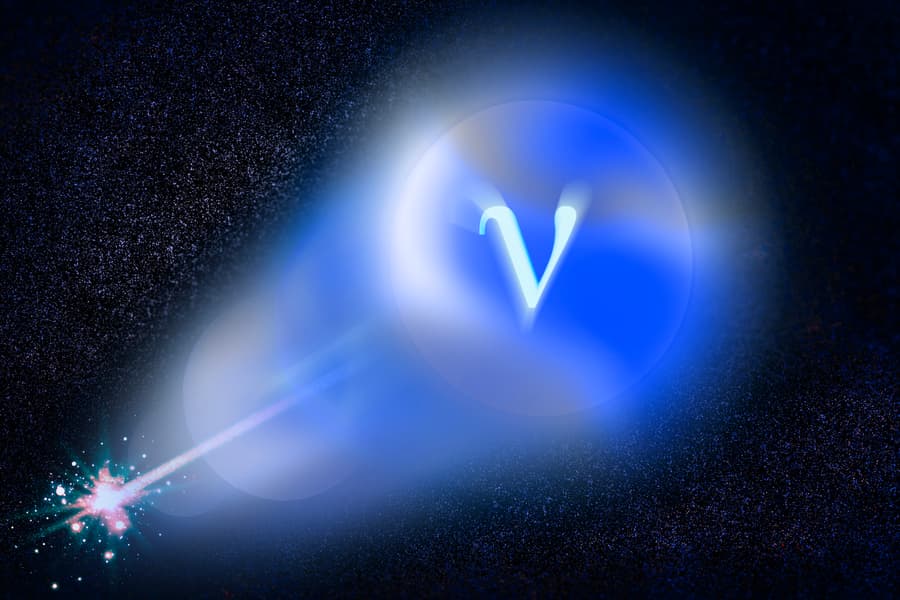
Introduction to Laser-Driven Neutrino Beam Technology
We are entering a transformative era in particle physics where laser-driven neutrino beams are redefining how we generate, control, and study neutrinos. This breakthrough approach leverages ultra-intense laser systems to produce highly controlled particle interactions, offering unprecedented precision compared to conventional accelerator-based methods.
By integrating cutting-edge laser-plasma physics with neutrino science, we unlock new pathways for fundamental discoveries, experimental efficiency, and scalable research infrastructure.
What Are Neutrinos and Why They Matter
Neutrinos are among the most abundant yet elusive particles in the universe. They interact only weakly with matter, making them extremely difficult to detect but incredibly valuable for probing the deepest layers of physical reality.
We focus on neutrinos because they:
-
Carry information across vast cosmic distances without interference
-
Provide insight into fundamental forces and particle interactions
-
Play a critical role in understanding astrophysical phenomena
-
Challenge the boundaries of the Standard Model of particle physics
The ability to generate precise and tunable neutrino beams significantly enhances our capacity to study their properties.
Limitations of Conventional Neutrino Beam Production
Traditional neutrino beams are generated through massive particle accelerators, where protons are accelerated and collided with a target to produce secondary particles that decay into neutrinos.
This approach presents several limitations:
-
Massive infrastructure requirements (kilometer-scale facilities)
-
High operational costs and energy consumption
-
Limited beam control and tunability
-
Inefficient particle production processes
We address these constraints by transitioning toward laser-driven systems that are compact, efficient, and highly controllable.
How Laser-Driven Neutrino Beams Work
Laser-driven neutrino beams rely on ultra-intense laser pulses interacting with matter to create plasma conditions that accelerate particles to high energies. These accelerated particles then decay into neutrinos.
Core Mechanism
-
A high-power laser pulse is directed at a solid or gaseous target
-
The interaction creates a plasma and accelerates charged particles
-
Secondary particles (such as pions) are produced
-
These particles decay into neutrinos with controllable energy profiles
Key Advantages of Laser-Driven Neutrino Beams
1. Compact and Scalable Infrastructure
We reduce the need for massive accelerators by replacing them with high-intensity laser systems that can fit within laboratory-scale environments.
2. Enhanced Beam Precision
Laser systems allow precise control over:
-
Energy spectra
-
Beam direction
-
Temporal structure
This precision enables more accurate experiments and reproducible results.
3. Energy Efficiency
Laser-driven methods significantly lower energy consumption compared to conventional accelerators, making them more sustainable and cost-effective.
4. Rapid Experimental Iteration
We can adjust laser parameters in real time, enabling faster experimentation cycles and adaptive research methodologies.
Applications in Advanced Particle Physics
Neutrino Oscillation Studies
Laser-driven beams provide controlled conditions for studying how neutrinos change “flavor” as they travel, improving our understanding of mass differences and quantum behavior.
Beyond Standard Model Research
We gain a powerful tool to investigate anomalies that may indicate new physics, including:
-
Sterile neutrinos
-
CP violation in the neutrino sector
-
Dark matter interactions
Astrophysical Simulation
By recreating neutrino production conditions similar to supernovae and cosmic events, we deepen our understanding of the universe’s most energetic processes.
Integration with Next-Generation Laser Facilities
We align this technology with emerging ultra-high-power laser systems, including petawatt and exawatt-class lasers. These facilities enable:
-
Higher particle energies
-
Increased neutrino flux
-
Greater experimental resolution
This synergy positions laser-driven neutrino beams at the center of future physics research infrastructure.
Technical Challenges and Engineering Solutions
Beam Stability
Maintaining consistent plasma conditions is critical. We address this through:
-
Adaptive laser pulse shaping
-
Real-time feedback systems
-
Precision target engineering
Detection Sensitivity
Given neutrinos’ weak interactions, detection remains challenging. We enhance sensitivity through:
-
Advanced detector materials
-
Large-volume detection systems
-
Improved signal processing algorithms
Scaling Production
To achieve practical neutrino flux levels, we optimize:
-
Laser repetition rates
-
Target durability
-
Energy transfer efficiency
Future Outlook: Toward a New Experimental Paradigm
We are transitioning from large-scale, centralized facilities to distributed, high-performance laser laboratories. This shift democratizes access to advanced particle physics research and accelerates innovation across disciplines.
Laser-driven neutrino beams will:
-
Enable smaller institutions to conduct high-impact experiments
-
Reduce barriers to entry in particle physics
-
Foster interdisciplinary collaboration between laser physics, materials science, and cosmology
Conclusion
We are redefining neutrino science through laser-driven beam technology. By combining precision, scalability, and efficiency, we establish a new standard for particle physics experimentation. This approach not only enhances our ability to study neutrinos but also opens the door to discoveries that could reshape our understanding of the universe.
The convergence of laser technology and particle physics marks a decisive step forward—one that positions laser-driven neutrino beams as a cornerstone of next-generation scientific exploration.