
New Energy Playbook: Cutting Dependence, Expanding Choice, Lowering Costs
As energy security moves to the forefront of European policy, the European Commission is reshaping its strategy around a simple objective: produce more energy at home, reduce exposure to external shocks, and make electricity more affordable for households and businesses.
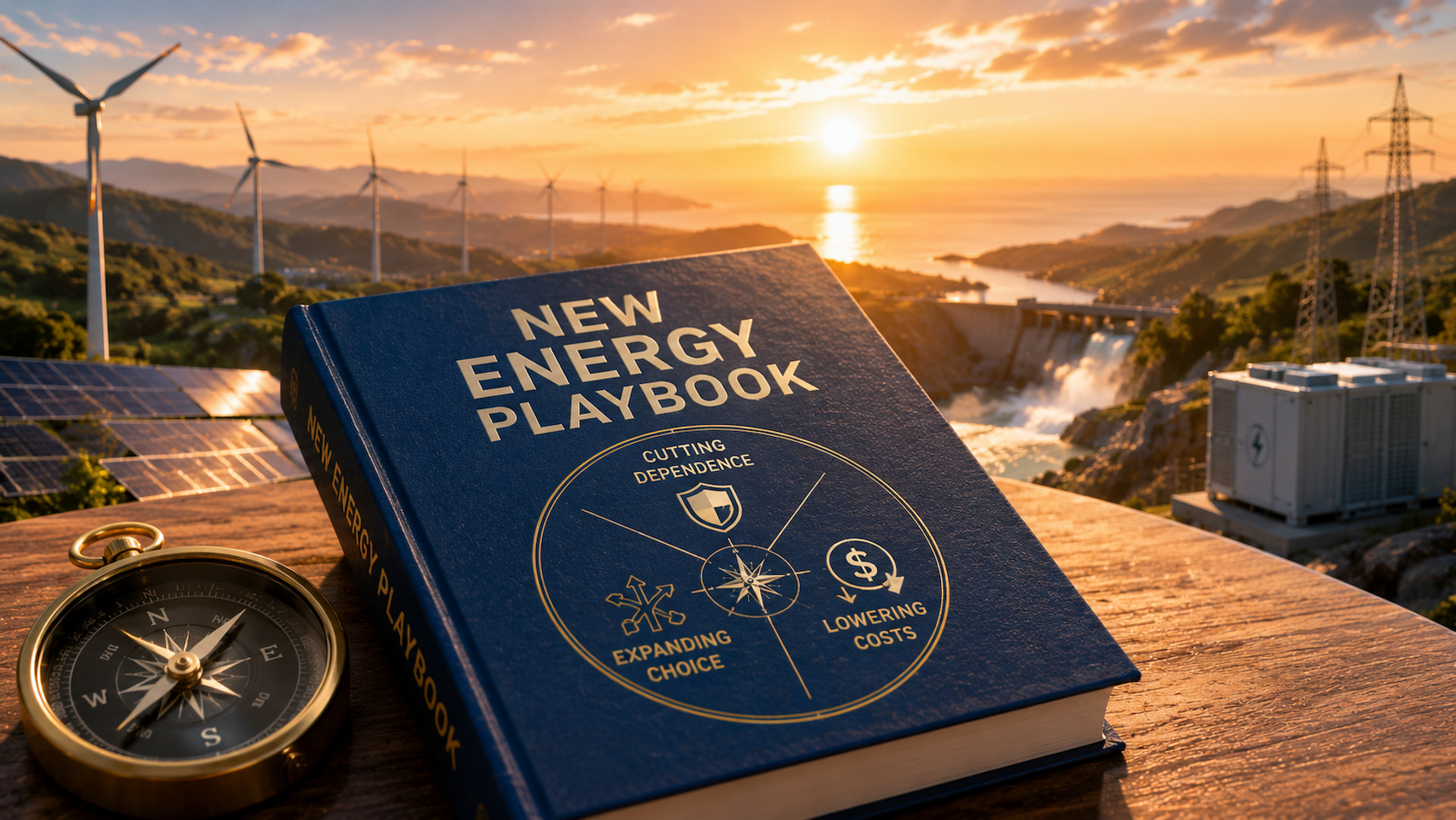
As energy security moves to the forefront of European policy, the European Commission is reshaping its strategy around a simple objective: produce more energy at home, reduce exposure to external shocks, and make electricity more affordable for households and businesses.
The initiative arrives at a moment when geopolitical tensions have exposed the vulnerabilities of relying heavily on imported fossil fuels. Across the continent, consumers continue to face elevated energy costs, while industries seek greater certainty about future energy supplies. In response, Brussels is placing long-term investment in clean energy technologies at the centre of its economic and security agenda.
Giving Consumers More Control
A major component of the Commission’s approach focuses on households and local communities. Through a new citizens’ energy package, policymakers aim to make energy systems more accessible, flexible, and affordable, particularly for those most affected by rising costs.
The measures are designed to lower household energy expenditures while expanding opportunities for citizens to generate, consume, and share renewable electricity. Special attention is being directed toward tackling energy poverty and ensuring that vulnerable communities benefit from the transition.
Consumers are also expected to gain practical advantages through easier supplier switching, reduced taxes and charges on electricity bills, and clearer information regarding contracts, pricing structures, and consumption patterns.
Unlocking Investment for the Energy Transition
Europe’s ambitions extend beyond consumption. The Commission argues that achieving energy independence will require a significant expansion of infrastructure and a stronger flow of private capital into the sector.
To accelerate progress, a new clean energy investment strategy seeks to narrow the gap between available financing and the scale of investment required. The initiative is intended to attract private funding for electricity grids, energy efficiency projects, and emerging clean energy technologies.
A central partner in this effort will be the European Investment Bank Group, which plans to support the transition with financing exceeding €75 billion over the next three years. The objective is to create the conditions necessary for large-scale deployment while reducing investment risks and encouraging broader market participation.
Building Europe’s Own Energy Technology Base
Reducing dependence on imported fuels is only part of the equation. European policymakers are increasingly focused on strengthening domestic industrial capabilities and creating resilient supply chains for strategic energy technologies.
Among the proposals is a dedicated strategy for small modular reactors, often referred to as SMRs. These next-generation nuclear systems are expected to play a role in diversifying Europe’s future energy mix. The Commission aims to support member states in bringing the first operational SMRs online during the early 2030s while helping industry accelerate development and commercialization efforts.
To encourage deployment, the Commission is considering an additional €200 million allocation through InvestEU. The funding would help reduce financial risks associated with the first commercial applications of innovative nuclear technologies.
Strengthening Competitiveness Through Resilient Supply Chains
European officials view a strong domestic supply chain as a strategic asset. A more flexible and self-sufficient industrial ecosystem can help secure technological leadership, support high-skilled employment, and improve cooperation between regulators and industry. Equally important is the ability to maintain rigorous safety standards while expanding manufacturing capacity and technological expertise across the continent.
A Broader Strategy for Energy Security
These initiatives build upon the Commission’s broader affordable energy agenda, which seeks to improve Europe’s competitiveness while lowering exposure to external energy dependencies.
The overarching goal is clear: a continent powered increasingly by its own resources, supported by modern infrastructure, and capable of delivering more stable and affordable energy to households and businesses alike.
Further measures are expected as the European Union continues to refine its long-term strategy for energy security, economic resilience, and sustainable growth.