
When Robots Stop Following Maps and Start Thinking Like Animals
For decades, autonomous robotics has advanced through an uncomfortable contradiction. Machines can process immense quantities of data, recognize objects with remarkable precision, and execute complex calculations in fractions of a second, yet many still become unreliable the moment the world behaves unpredictably.
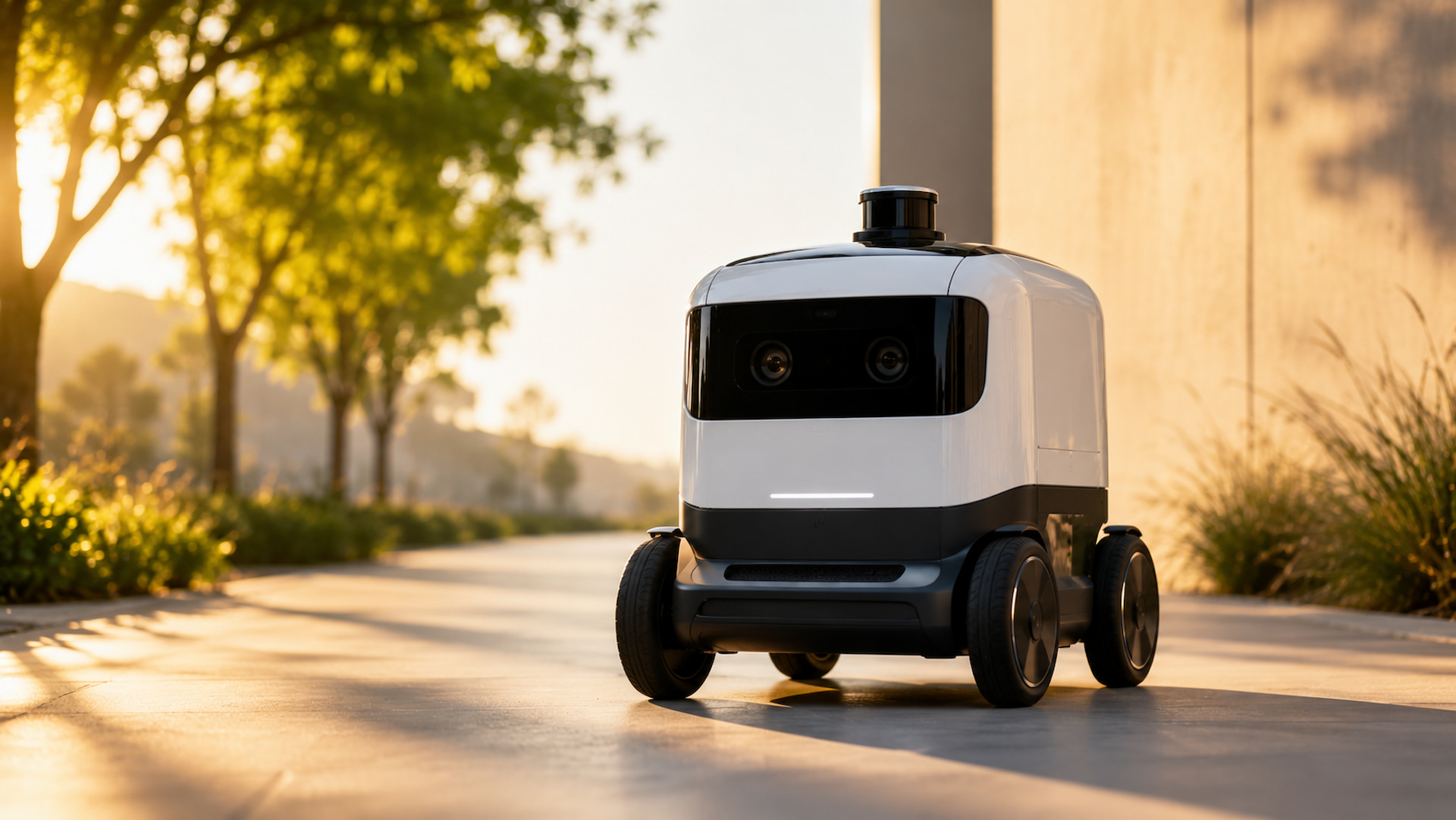
For decades, autonomous robotics has advanced through an uncomfortable contradiction. Machines can process immense quantities of data, recognize objects with remarkable precision, and execute complex calculations in fractions of a second, yet many still become unreliable the moment the world behaves unpredictably. A hallway changes shape, debris blocks a route, lighting conditions shift, or a map becomes outdated, and systems that once appeared sophisticated suddenly expose their fragility.
Biological organisms rarely encounter this problem. A rat can navigate unfamiliar terrain, birds migrate across continents, and predators adjust instantly to changing landscapes, all while operating on energy budgets that remain astonishingly small compared with those of modern machines. Robotics researchers are increasingly concluding that the problem is not computational power alone. The deeper issue is that robots still lack the internal spatial intelligence that living creatures evolved millions of years ago.
Inside the mammalian brain exists a navigational framework far more advanced than simple route memorization. Animals construct internal models of space that allow them to interpret environments dynamically rather than mechanically. These cognitive maps are not static blueprints. They reorganize continuously, absorb new information, discard irrelevant details, and connect past experience with immediate sensory input. Through this layered spatial awareness, animals can improvise routes, remember strategic landmarks, and adapt behavior without recalculating every movement from scratch. Translating this principle into robotics represents a profound shift away from rigid sensor-response systems toward machines capable of maintaining abstract internal representations of their surroundings.
Conventional robotic navigation typically falls into two dominant categories. Some systems rely heavily on predefined environmental models, where success depends on accurate maps and predictable conditions. Others use deep learning approaches trained on massive datasets, extracting patterns from previous examples to guide movement. Both strategies have produced notable achievements, yet both reveal critical weaknesses outside controlled settings.
Model-based approaches struggle when environments change unexpectedly, while data-driven systems often fail when exposed to scenarios not represented during training. Biological systems avoid these limitations because they reason spatially rather than merely react statistically. Researchers are now attempting to replicate that capability by designing robotic architectures inspired directly by neural mechanisms found in the hippocampus and related brain regions.
One of the most influential discoveries in neuroscience involved specialized neurons associated with spatial orientation. Place cells activate when an animal occupies a particular location. Grid cells generate geometric coordinate patterns that support navigation across distances. Head-direction cells function as an internal compass, maintaining orientation even in the absence of visual cues. Together, these systems create an adaptive positioning network that enables animals to move fluidly through uncertain terrain. Engineers increasingly view these biological mechanisms not simply as scientific curiosities but as templates for next-generation robotic cognition.
The implications for autonomous machines are substantial. Instead of storing exhaustive environmental detail, robots equipped with biologically inspired spatial frameworks could compress information hierarchically, preserving only the most relevant structural relationships. This reduces computational overhead while increasing adaptability. A robot navigating a disaster zone, for example, would not need to reconstruct every obstacle continuously. It could maintain a broader understanding of spatial organization while updating only critical local changes. Such efficiency mirrors how living organisms conserve metabolic energy while maintaining extraordinary navigational flexibility.
Equally transformative is the concept of hierarchical planning. Animals do not calculate movement through exhaustive step-by-step optimization. Their navigation operates across multiple scales simultaneously. A migrating bird determines a continental trajectory while also responding instantly to wind patterns and terrain features. Mammals similarly combine long-range objective planning with rapid local adjustments. Many robotic systems, by contrast, remain trapped between two inefficient extremes: computationally expensive global pathfinding or simplistic reactive obstacle avoidance. Bio-inspired hierarchical planning introduces layered decision-making structures capable of coordinating strategic goals with immediate environmental responses in real time.
This architectural evolution becomes especially important in environments characterized by uncertainty. Urban infrastructure, industrial facilities, disaster regions, forests, subterranean tunnels, and extraterrestrial landscapes all present conditions where static assumptions collapse rapidly. A robot functioning effectively in such contexts requires more than navigation. It requires resilience. Biological cognition achieves resilience through plasticity, the ability to reorganize internal representations when circumstances change. Replicating this trait in machines demands continual learning systems capable of revising spatial memory without catastrophic loss of prior knowledge.
Power consumption presents another defining obstacle. Autonomous operation remains severely constrained by energy demands, particularly when advanced computation, sensing, and navigation must occur simultaneously. Traditional processors consume substantial power during continuous environmental analysis, limiting operational endurance. Nature again provides an alternative blueprint. The human brain performs immense parallel processing tasks while consuming roughly the energy equivalent of a household light bulb. Neuromorphic hardware attempts to replicate this efficiency through architectures modeled on biological neural activity.
Unlike conventional processors that operate through constant clock-driven computation, neuromorphic systems process information through sparse, event-driven spikes resembling neuronal signaling. Computation occurs only when relevant activity emerges, dramatically reducing unnecessary energy expenditure. For robotic navigation, this paradigm is particularly attractive because environmental information is inherently event-based. A moving obstacle, a shifting landmark, or a change in terrain triggers processing only when needed. This allows robots to maintain situational awareness while operating within far tighter energy constraints than traditional hardware permits.
Researchers developing these systems increasingly envision robots that combine cognitive mapping, adaptive memory, and neuromorphic processing into unified navigation platforms. Such integration could enable extended autonomous operation in environments where recharging or human intervention remains impossible. Planetary exploration missions, remote environmental monitoring systems, underwater robotics, and search-and-rescue deployments all stand to benefit from machines capable of sustaining intelligent movement over long durations without excessive power requirements.
Recent experimental results suggest that these concepts are moving beyond theory. Hybrid cognitive architectures have demonstrated improved generalization compared with conventional navigation systems, particularly in unfamiliar environments where rigid models typically fail. Neuromorphic prototypes have also shown significant reductions in energy consumption during spatial processing tasks. Although many implementations remain early-stage, the convergence of neuroscience and robotics is beginning to produce measurable operational advantages rather than speculative promises.
The trajectory of this research also points toward a broader transformation in machine autonomy. Future robots may not simply move through environments efficiently. They may interpret environments contextually. Semantic spatial reasoning allows a system to assign meaning to locations, objects, and routes. An autonomous machine operating in a collapsed building, for instance, could distinguish between pathways likely to contain survivors and structurally unstable regions that present unacceptable risk. Such reasoning resembles the contextual decision-making processes animals employ instinctively when balancing danger, opportunity, and survival.
This emerging sophistication inevitably raises ethical and societal questions alongside technical ones. As machines adopt increasingly biological forms of cognition, distinctions between programmed behavior and autonomous reasoning become less clear. Questions surrounding accountability, trust, and human oversight will intensify as robotic systems gain the capacity to make independent navigational judgments in complex environments. The closer engineers move toward replicating adaptive intelligence found in living organisms, the more essential it becomes to establish frameworks governing how such systems operate alongside humans.
Even so, the broader scientific direction is unmistakable. Robotics is gradually abandoning the notion that intelligence emerges purely from larger datasets and faster processors. Increasingly, the field recognizes that evolution solved many navigational problems long before the invention of digital computation. Animals achieve extraordinary efficiency not because they calculate everything, but because their cognition filters, prioritizes, compresses, and adapts continuously. By embedding these same principles into autonomous systems, researchers are reshaping what robotic mobility can become.
The next generation of machines may therefore navigate less like computers and more like living organisms, conserving energy, responding fluidly to uncertainty, and constructing internal understanding rather than merely executing instructions. In that transition lies the possibility of a profound technological shift, one where robotic systems stop depending entirely on prewritten maps and begin developing something closer to genuine spatial intelligence.